After arriving in Port aux Basques on the overnight Marine Atlantic Ferry From Nova Scotia, one of our first stops in Newfoundland was Cape Rose Blanche Lighthouse.
The drive took us along Newfoundland’s southwest coast to the small community of Rose Blanche, where a walking trail leads across the rocky coastline to the historic stone lighthouse.
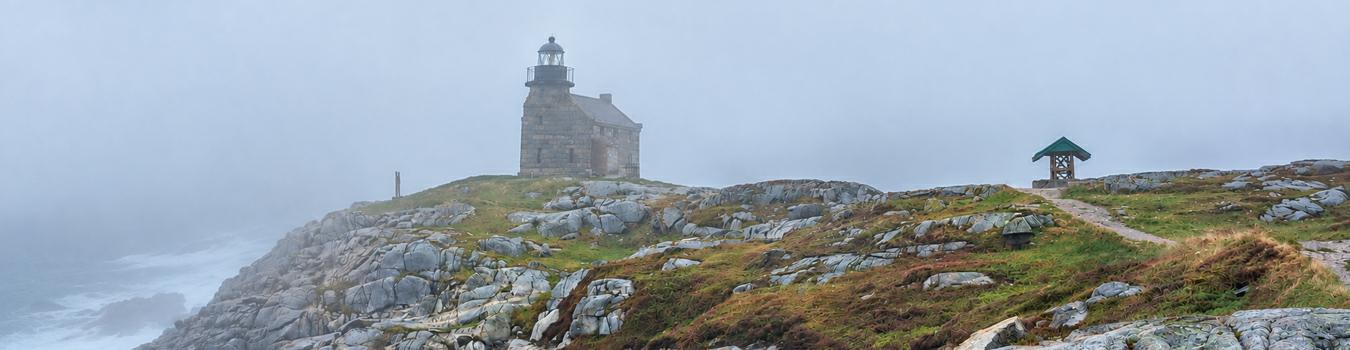
It was a foggy morning when we visited, which limited some of the distant views but seemed perfectly suited to an old lighthouse perched above the Atlantic. As we followed the trail, the lighthouse gradually appeared through the mist—a pretty fitting introduction to Newfoundland’s rugged coastline.
Walking the Trail to the Lighthouse
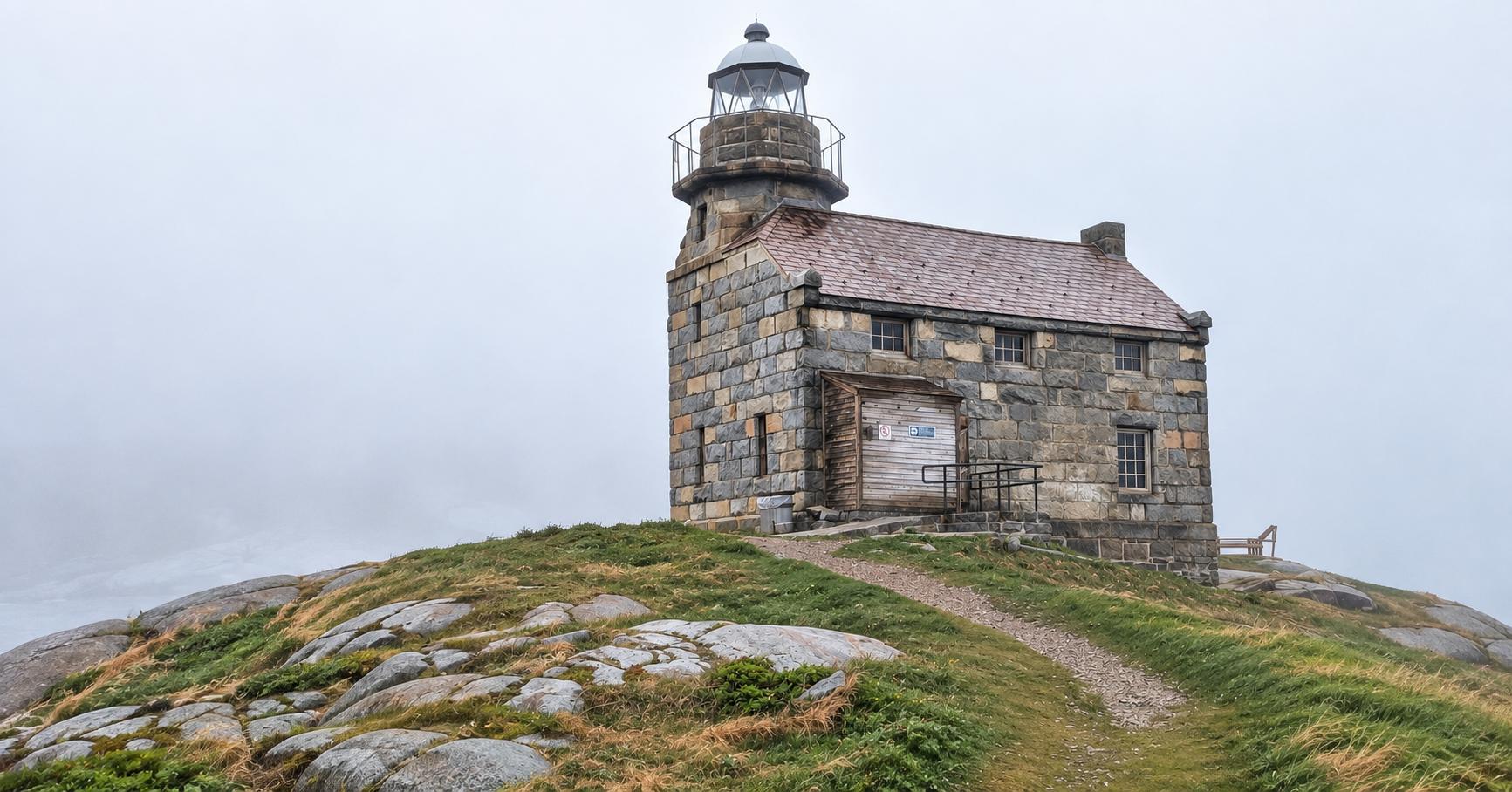
Getting to the lighthouse is part of the experience. A well-maintained gravel trail loops for about 2 kilometers through the rocky landscape, with views of Rose Blanche Harbour and the Atlantic along the way.
After exploring the lighthouse, we spent more time walking around the grounds and along the trail. The coastline surrounding Rose Blanche is rugged and exposed, with massive granite formations dropping toward the Atlantic.
Cape Rose Blanche Lighthouse Trails
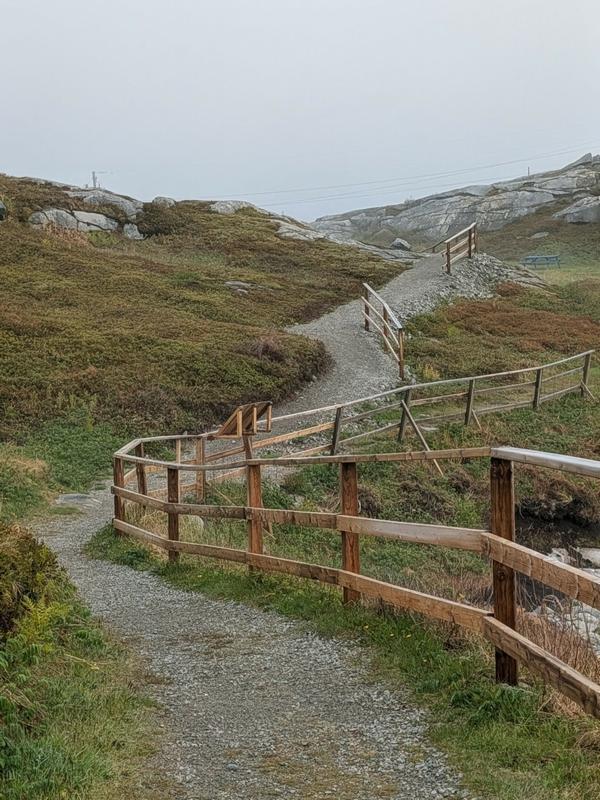
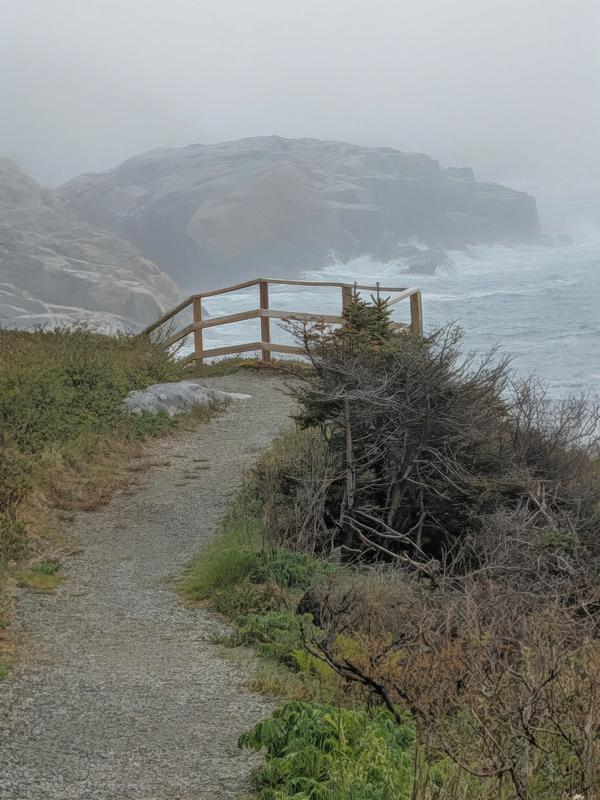
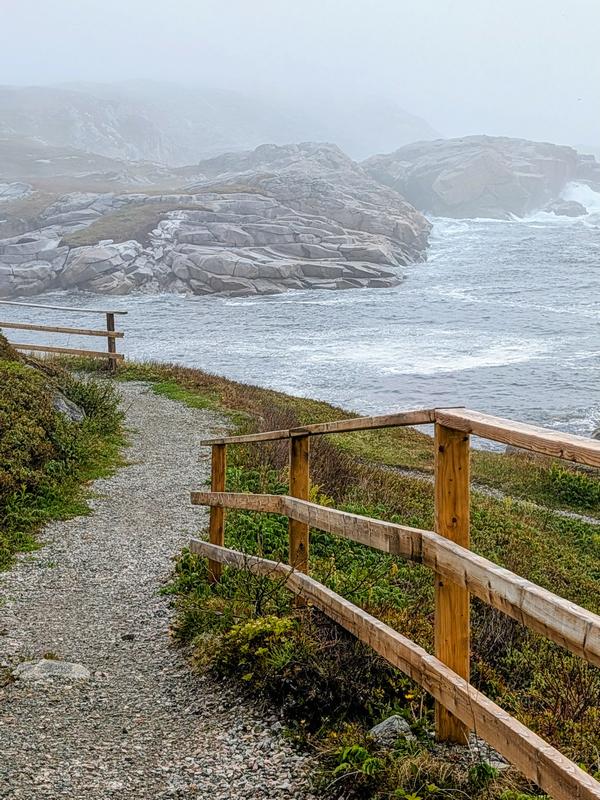
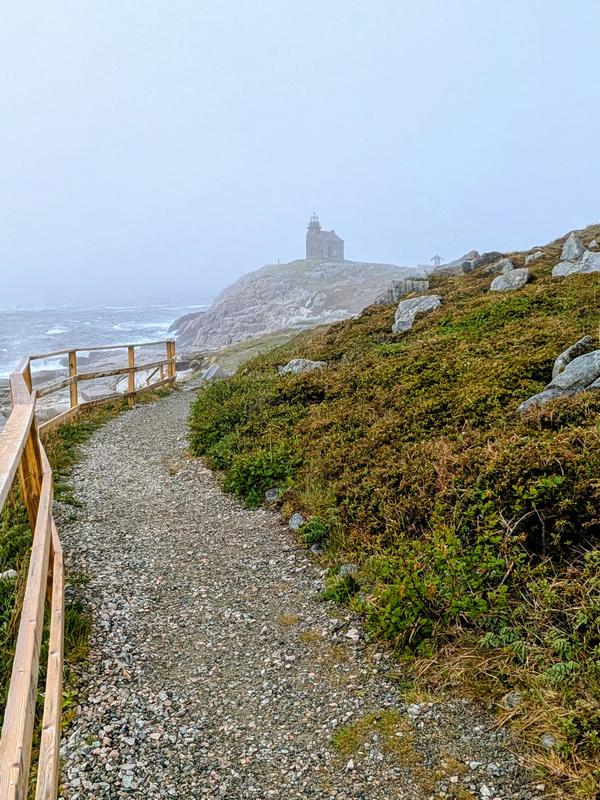
We really enjoyed the walk and found ourselves stopping frequently to take in the coastline and watch the waves crashing against the rocks.
One of the more unusual things we noticed was a naturally shaped rock known as the Praying Hands, which really does resemble two hands pressed together. It was one of those little things along the trail that caught our attention and made the walk even more interesting.
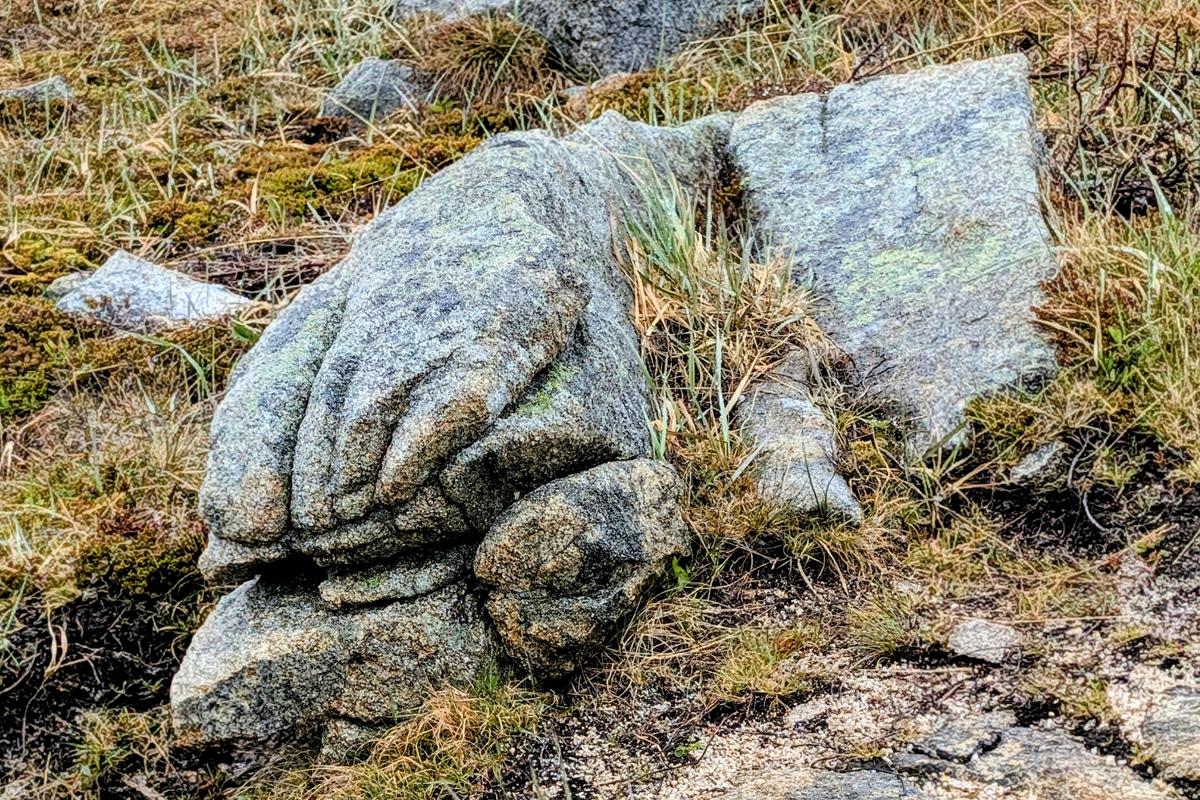
The fog continued to drift across the landscape as we walked. At times it obscured much of the surrounding coastline, but rather than detracting from the experience, it gave the entire area a character of its own.
And as we got closer, the lighthouse began to emerge more clearly from the mist.
A Lighthouse Built from Granite
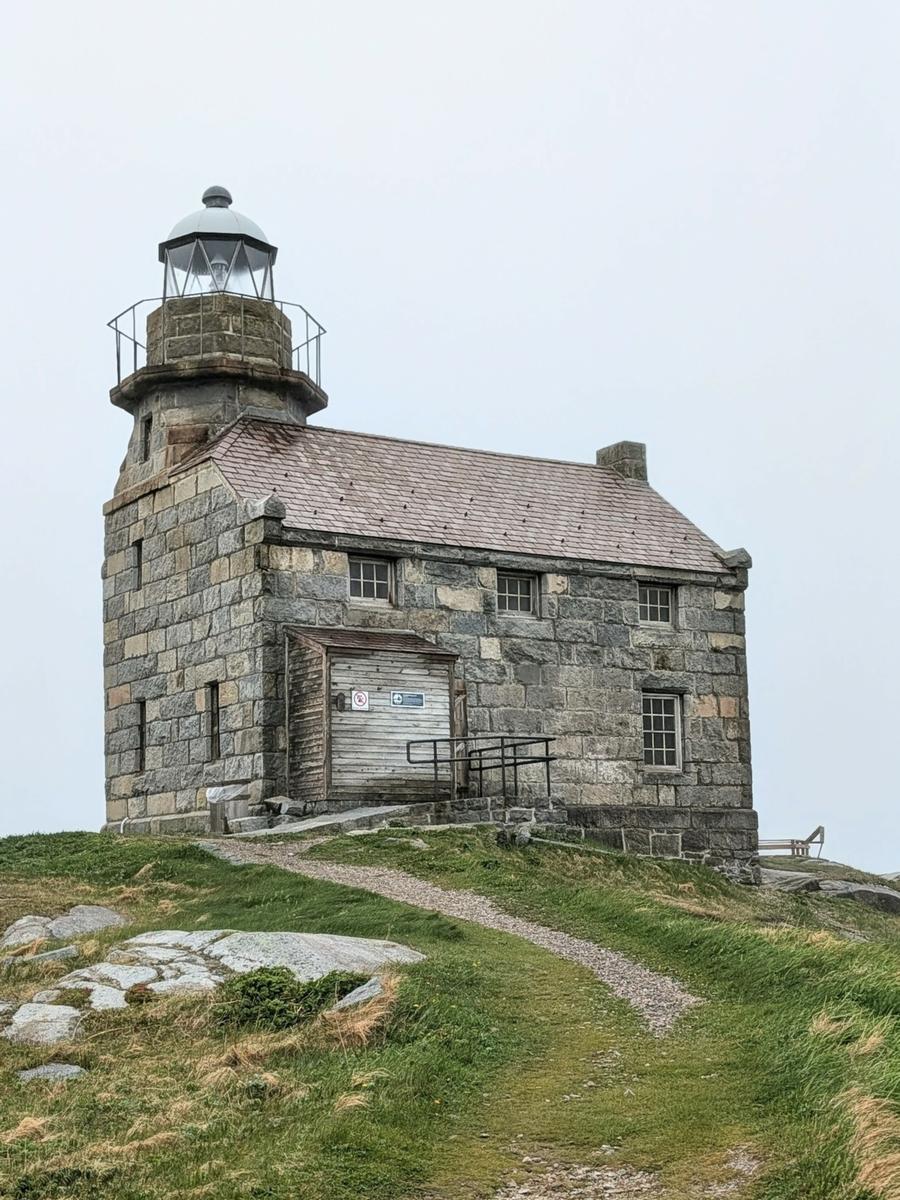 Cape Rose Blanche Lighthouse was constructed between 1871 and 1873 using granite quarried near the site. It began operating in 1873, guiding vessels along this rugged stretch of Newfoundland’s southwest coast.
Unlike the wooden or iron lighthouses you might expect to find elsewhere in Atlantic Canada, Rose Blanche was built from massive blocks of granite. Today, it is recognized as the only granite lighthouse in Atlantic Canada.
The lighthouse eventually fell into disrepair, with much of the original structure disappearing over the years. A major community-led restoration took place during the late 1990s, using original granite wherever possible along with additional stone from the original quarry.
The restored lighthouse was designated a Registered Heritage Structure in 2002.
Exploring Inside the Lighthouse
One of the things we particularly enjoyed was being able to go inside.
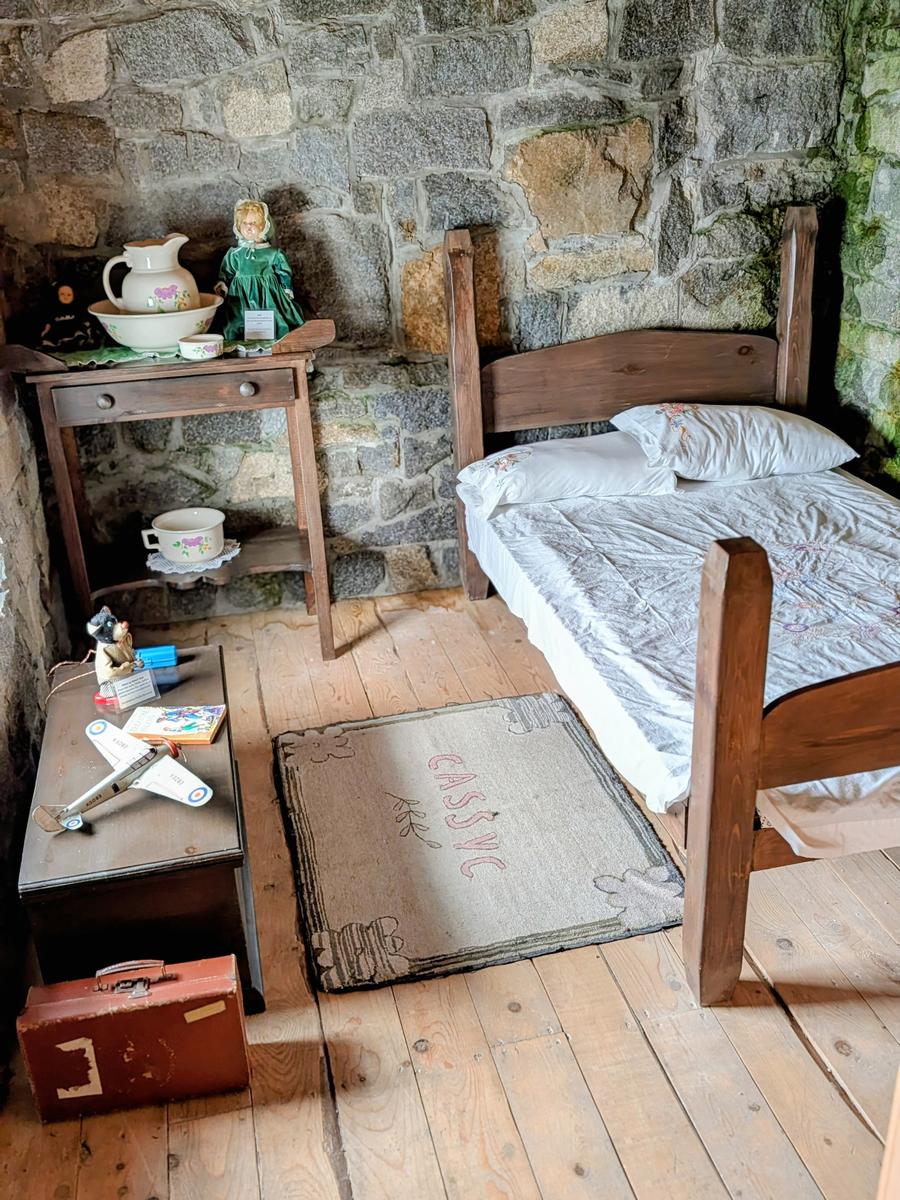
The restoration recreated the lighthouse keeper’s living quarters, and we were able to walk through the furnished rooms and get a sense of what living and working here might once have been like.
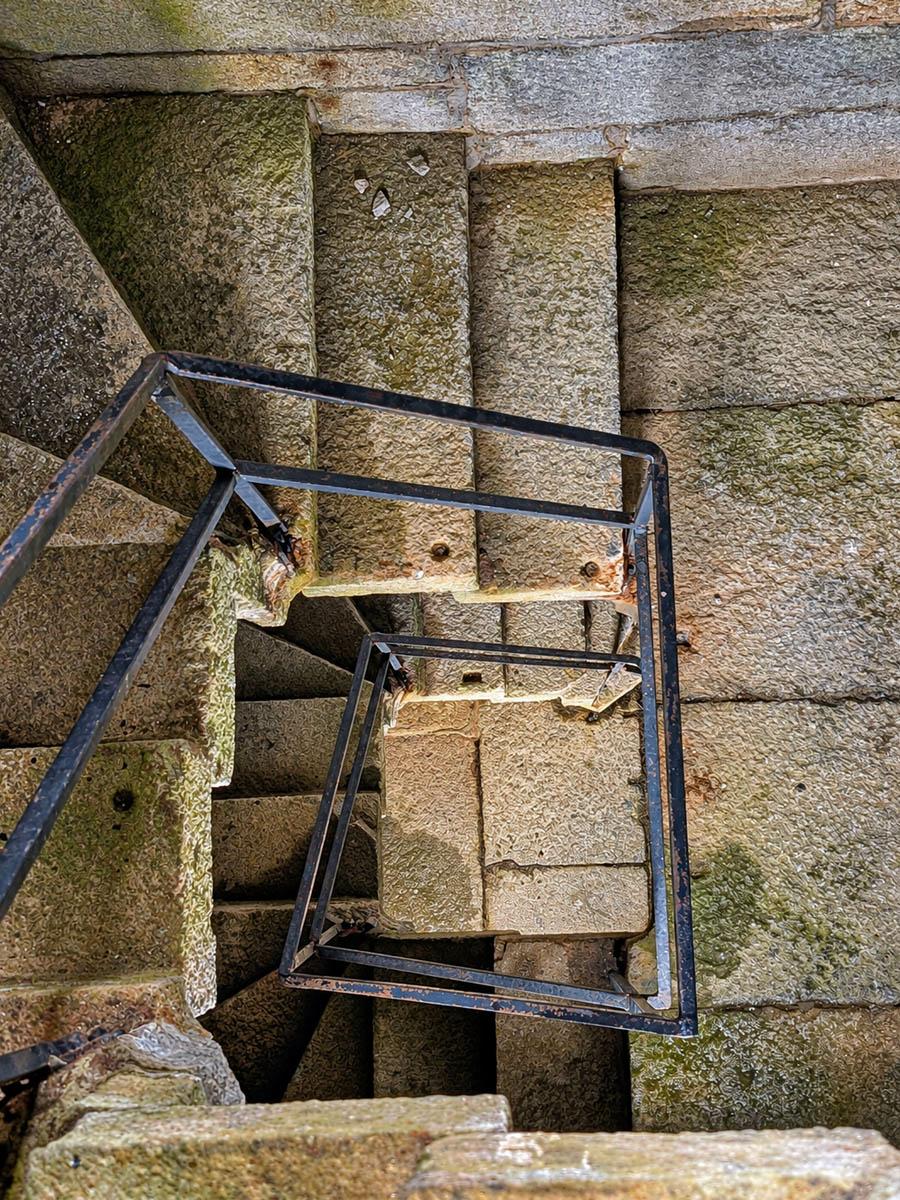
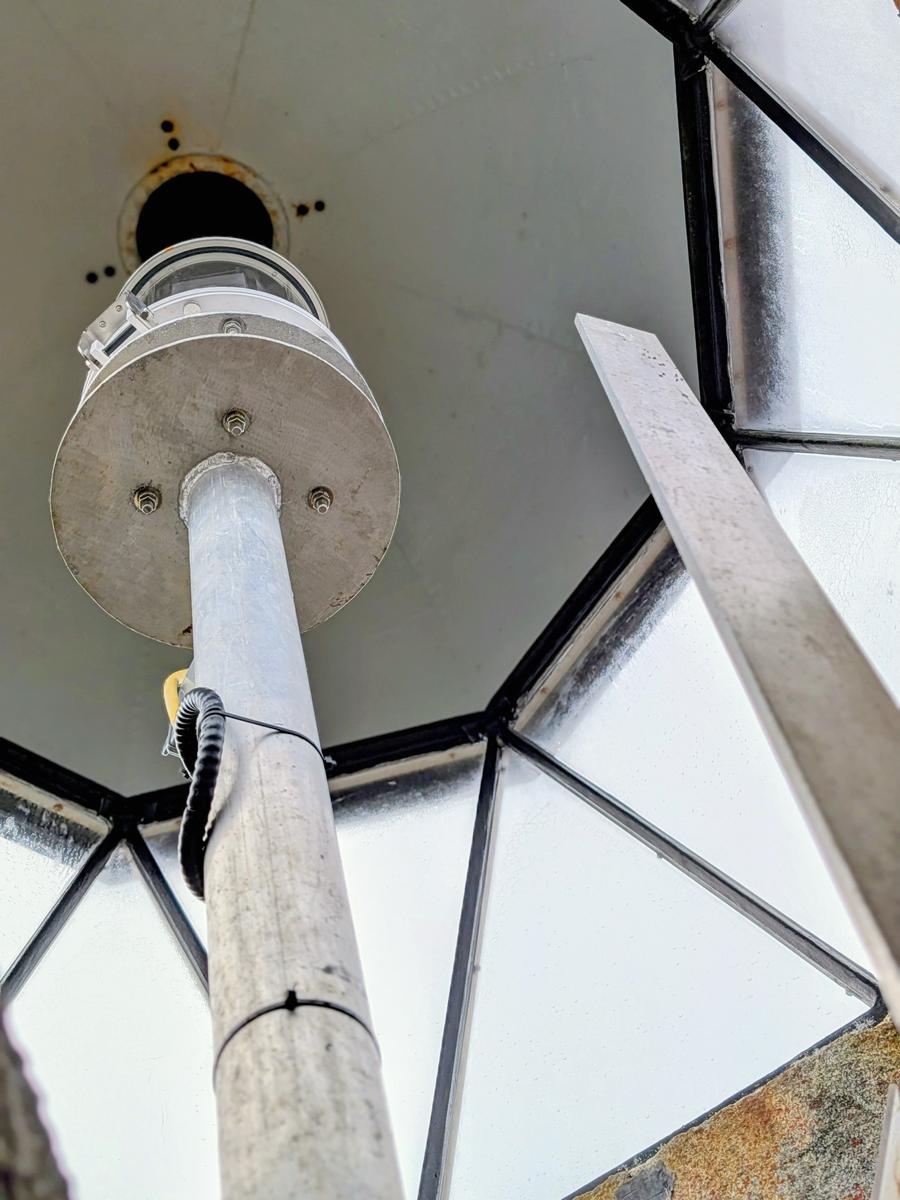
We continued up the narrow stairs toward the light at the top of the tower. Being able to explore the interior made our visit much more interesting than simply seeing the lighthouse from outside.
It also provided a closer look at just how substantial the granite structure really is.
Cape Rose Blanche Lighthouse Interior
Watching the Atlantic
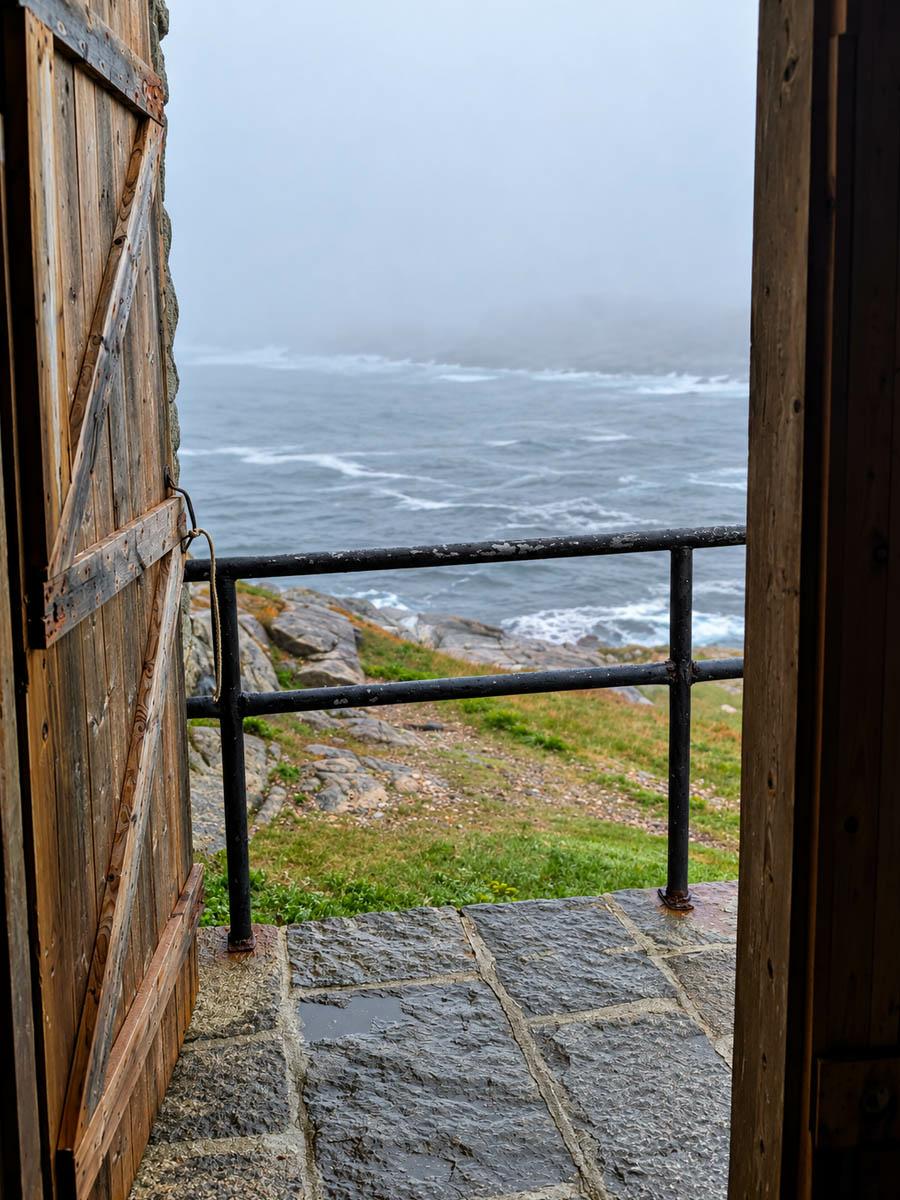
During our visit, the ocean was particularly active, with waves repeatedly crashing against the rocks below. We also spent quite a while watching a small boat make its way through the rough water offshore. We’re not exactly sure what they were doing in the rough waters, but watching the boat rise and fall with the waves certainly gave us an appreciation for the conditions along this stretch of coast.
Waves At Cape Rose Blanche Lighthouse
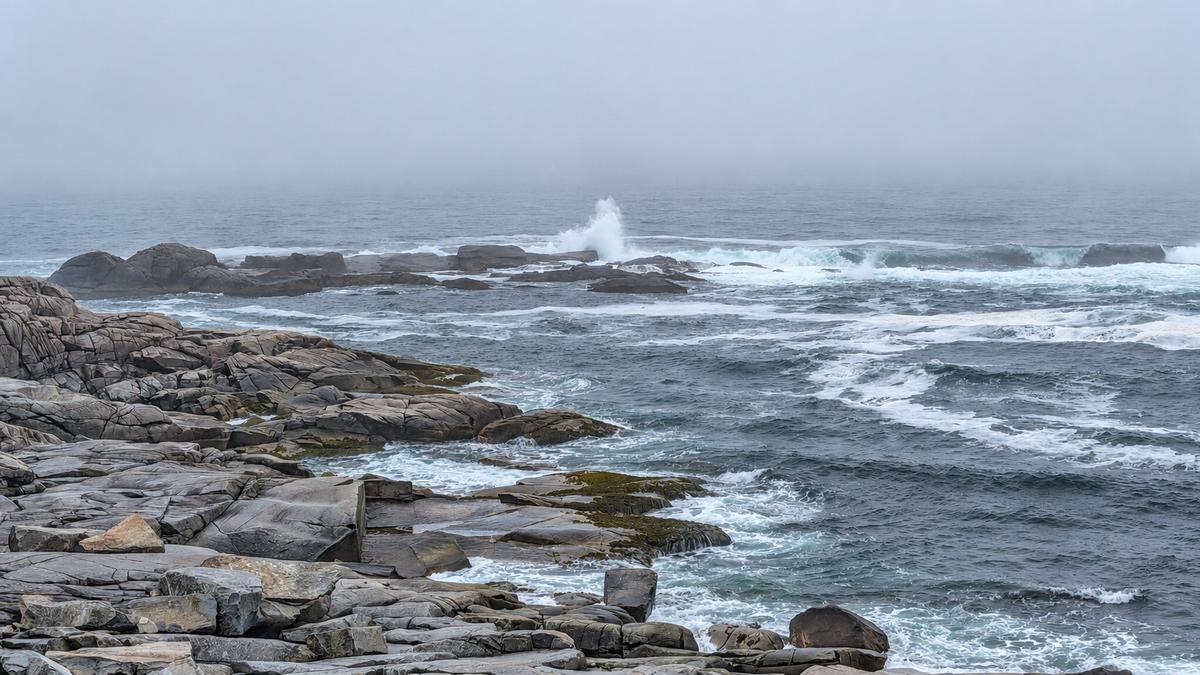
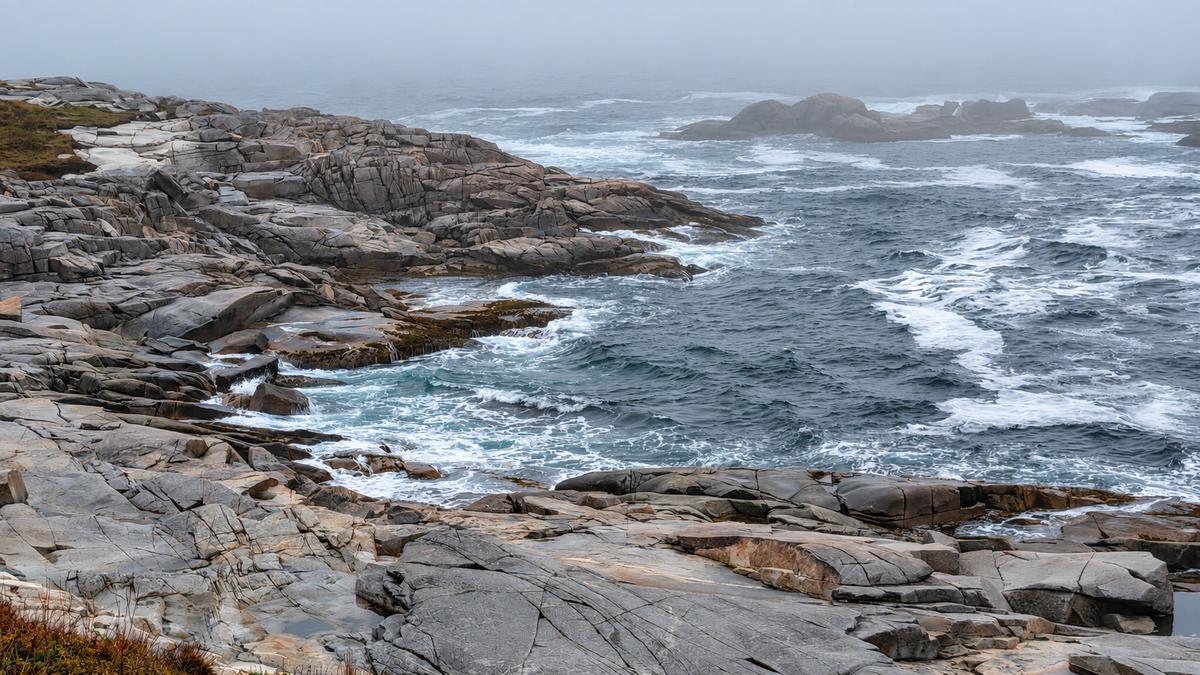
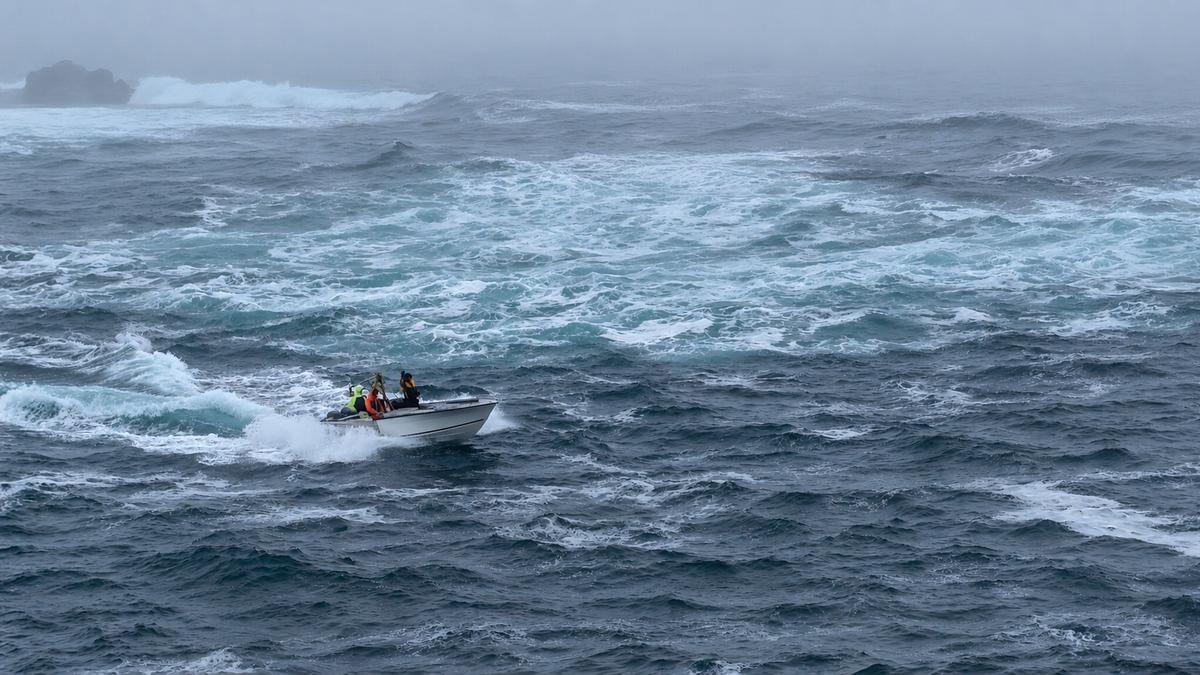
There was something about standing there in the fog, listening to the ocean and watching the waves hit the shoreline that seemed very appropriate for our first morning in Newfoundland.
How Much Time Should You Allow?
We spent about an hour at Cape Rose Blanche, which gave us enough time to walk the trail, explore the rooms inside the lighthouse, climb the stairs to the light and spend some time enjoying the coastline.
You could certainly spend longer if you wanted to take your time with photography or explore more of the trail, but we never felt rushed during our visit.
For us, an hour was about right.
Planning a Visit to Cape Rose Blanche Lighthouse
The lighthouse is located near the community of Rose Blanche on Newfoundland’s southwest coast and makes an easy first stop after arriving by ferry in Port aux Basques.
The walking trail is approximately 2 kilometers and is generally easy, although—as with many coastal locations in Newfoundland—weather can change the experience considerably. Comfortable walking shoes are a good idea, particularly in damp or foggy conditions.
We paid $7 per person for admission during our June 2026 visit. The lighthouse operates seasonally, generally during the summer months. Because opening dates, hours and admission prices can change, we’d recommend checking current visitor information before making the drive.
There is also a Fisherman’s Museum near the visitor area, although we concentrated our time on the trail and lighthouse itself.
One More Stop Along the Way: Barachois Falls
Another place worth watching for on the drive between Port aux Basques and Rose Blanche is the Barachois Falls Hiking Trail along Route 470.
The wet conditions made us decide against hiking the trail that morning, but we were still able to see the waterfall cascading down the mountainside from the road. With all the recent moisture, there was plenty of water flowing when we passed.
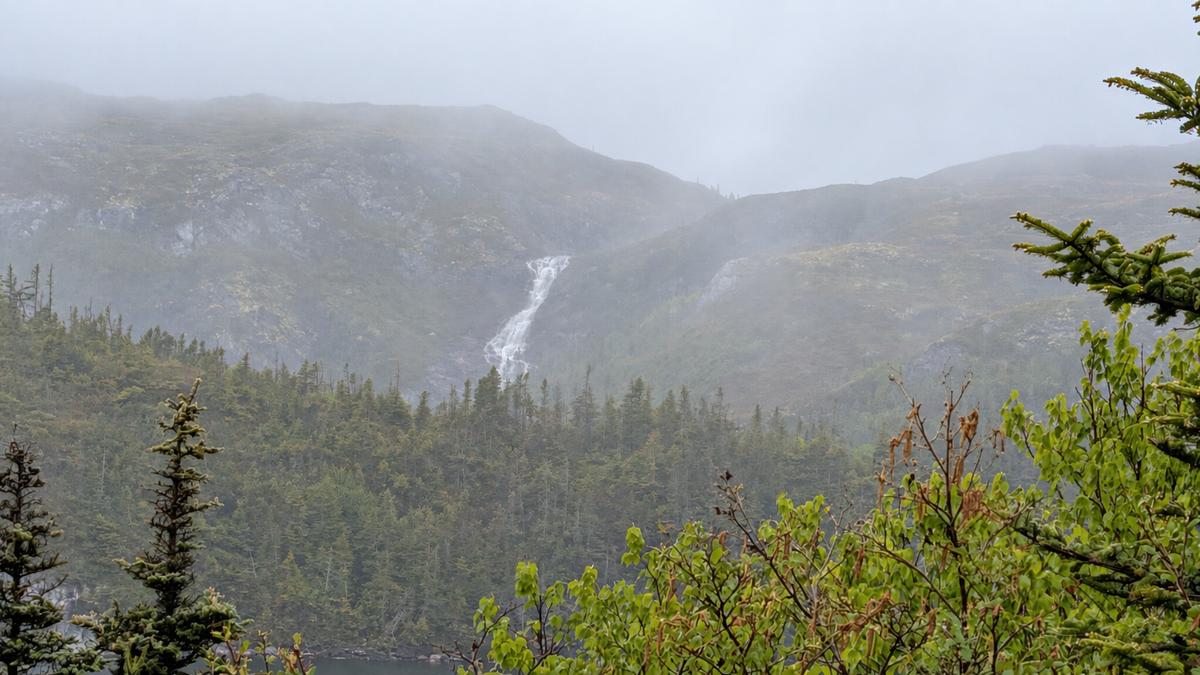
The trail is about 1.6 kilometers and would have been the kind of short hike we normally enjoy. If the conditions had been a little better, we probably would have added it to our morning.
A Great First Stop in Newfoundland
Looking back, Cape Rose Blanche Lighthouse was a great choice for our first stop after arriving in Newfoundland.
The historic granite lighthouse was interesting to explore, but we enjoyed the walk and surrounding coastline just as much. Between the fog, the crashing Atlantic waves and the lighthouse slowly appearing through the mist, we got our first taste of the rugged coastal scenery we’d come to Newfoundland to experience.
And after spending the previous night crossing from Nova Scotia aboard the ferry, it felt like our Newfoundland road trip had officially begun.
Planning a Newfoundland Road Trip?
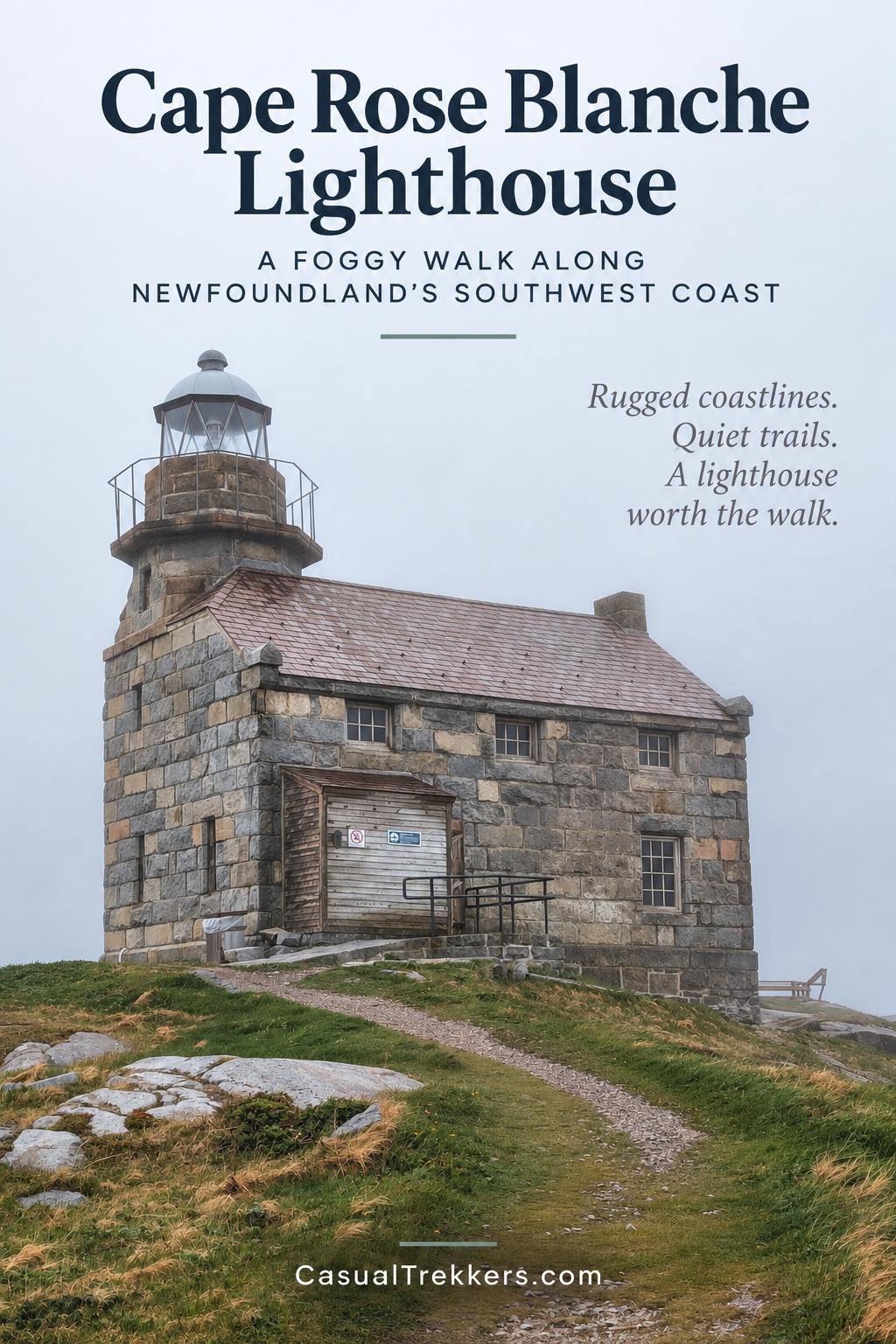
Save this pin for your visit to Cape Rose Blanche Lighthouse.