With approximately 17,542 kilometres (10,900 miles) of coastline, Newfoundland has no shortage of dramatic coastal scenery.
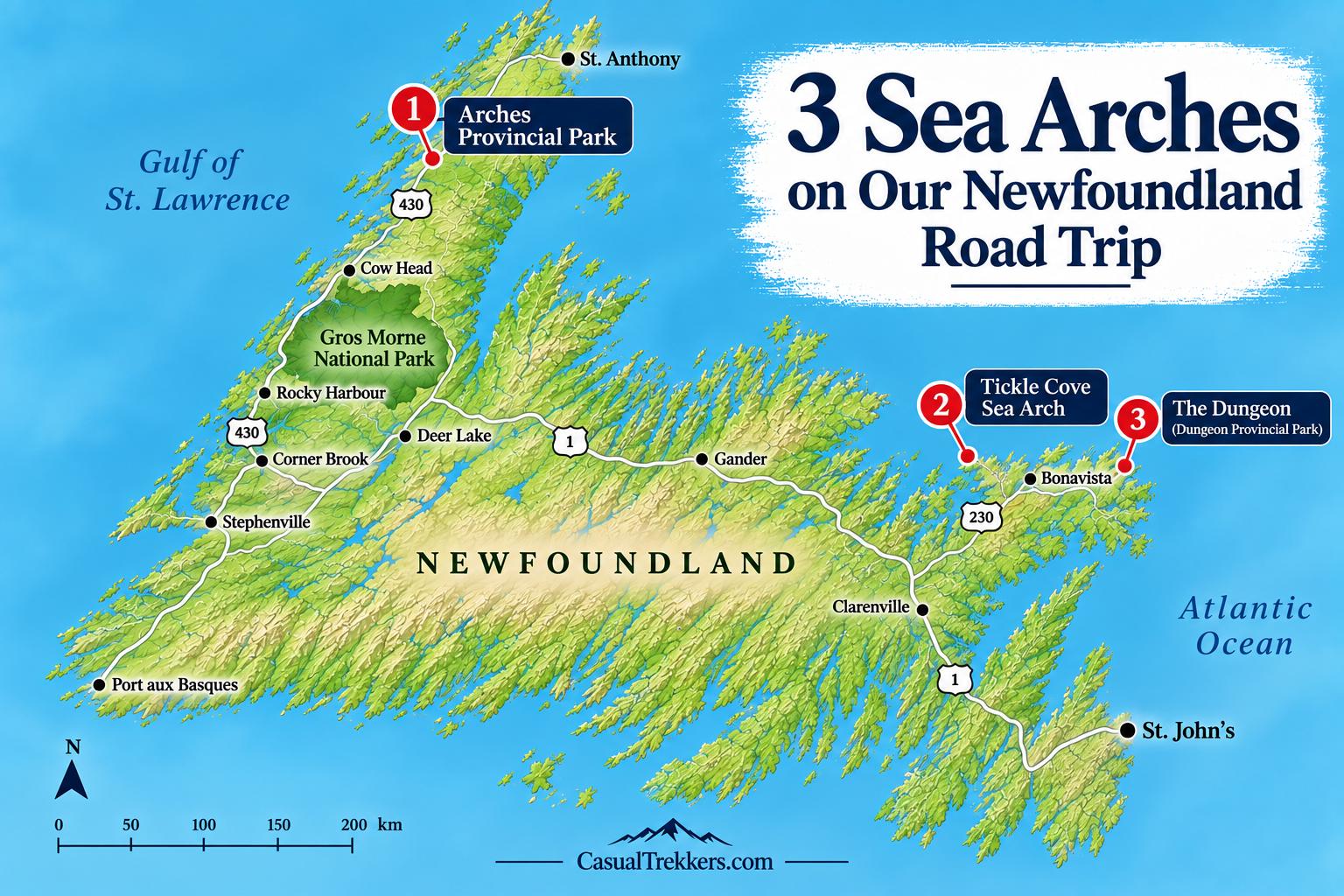
During our travels around the island, we’ve come across three sea arches that particularly stood out to us. One sits along a cobblestone beach on Newfoundland’s west coast, while the other two are found on the Bonavista Peninsula on the opposite side of the island.
Although all three have been shaped by the constant forces of the ocean, they’re surprisingly different from one another.
From the massive formation at Arches Provincial Park to the colorful rock at Tickle Cove and the collapsed sea cave known as the Dungeon, each was well worth including in our Newfoundland travels.
1. Arches Provincial Park
Our first stop took us to Arches Provincial Park, along the Great Northern Peninsula north of Gros Morne National Park.
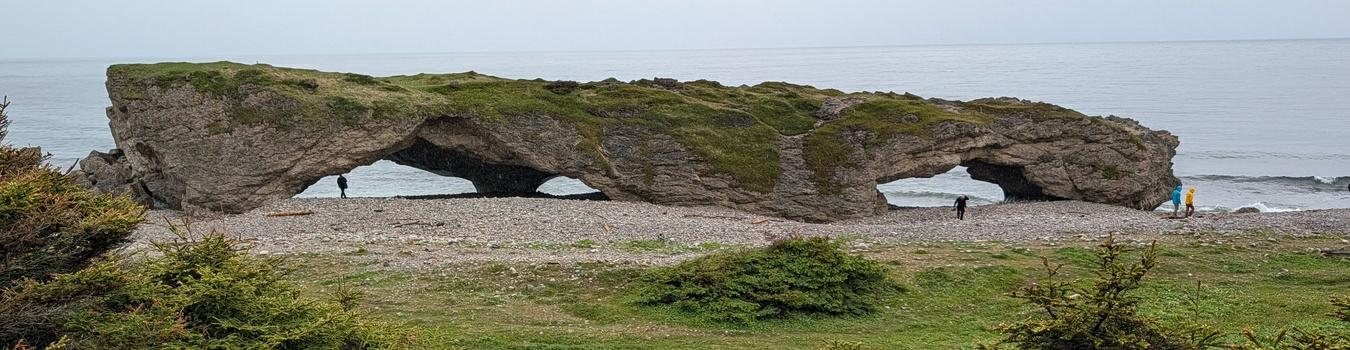
Arches Provincial Park has perhaps the most traditional sea-arch appearance of the three. A short walk from the parking area leads to a cobblestone beach, where a massive rock formation stretches along the shoreline.
And you really don’t appreciate its size until you get closer.
The formation contains three natural arches, and having people standing nearby really helps show just how large they are. Interestingly, there were originally four arches, but one has already collapsed as erosion continues to reshape the formation.
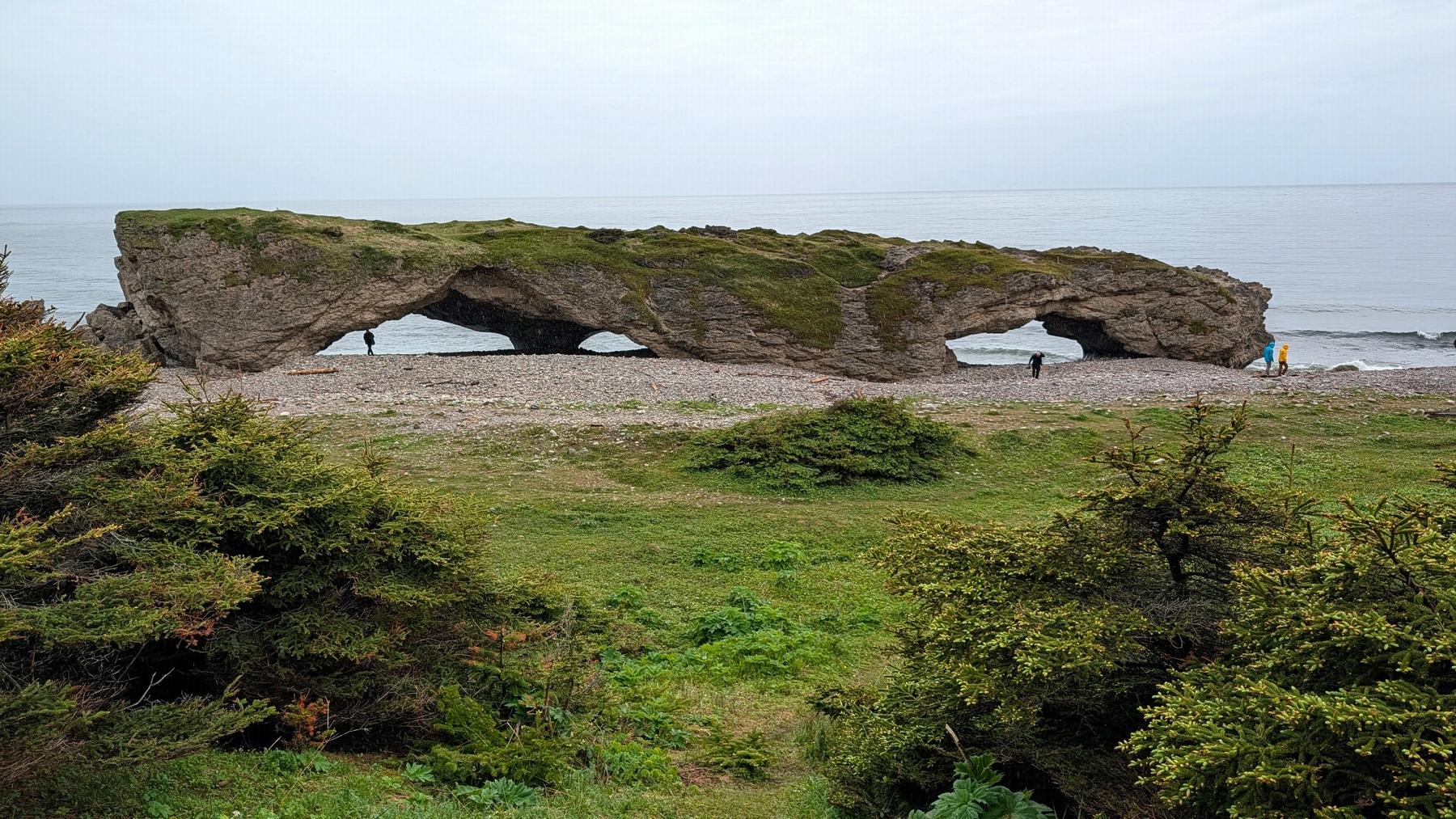
Thousands of years of wave action carved the arches into a rock known as dolomitic conglomerate. The same waves that helped create them continue to erode the formation today.
We spent some time walking along the beach and looking at the arches from several different angles. You can see the ocean through the openings, and getting closer to the formation gives you a much different perspective than simply viewing it from farther up the beach.
Arches Provincial Park
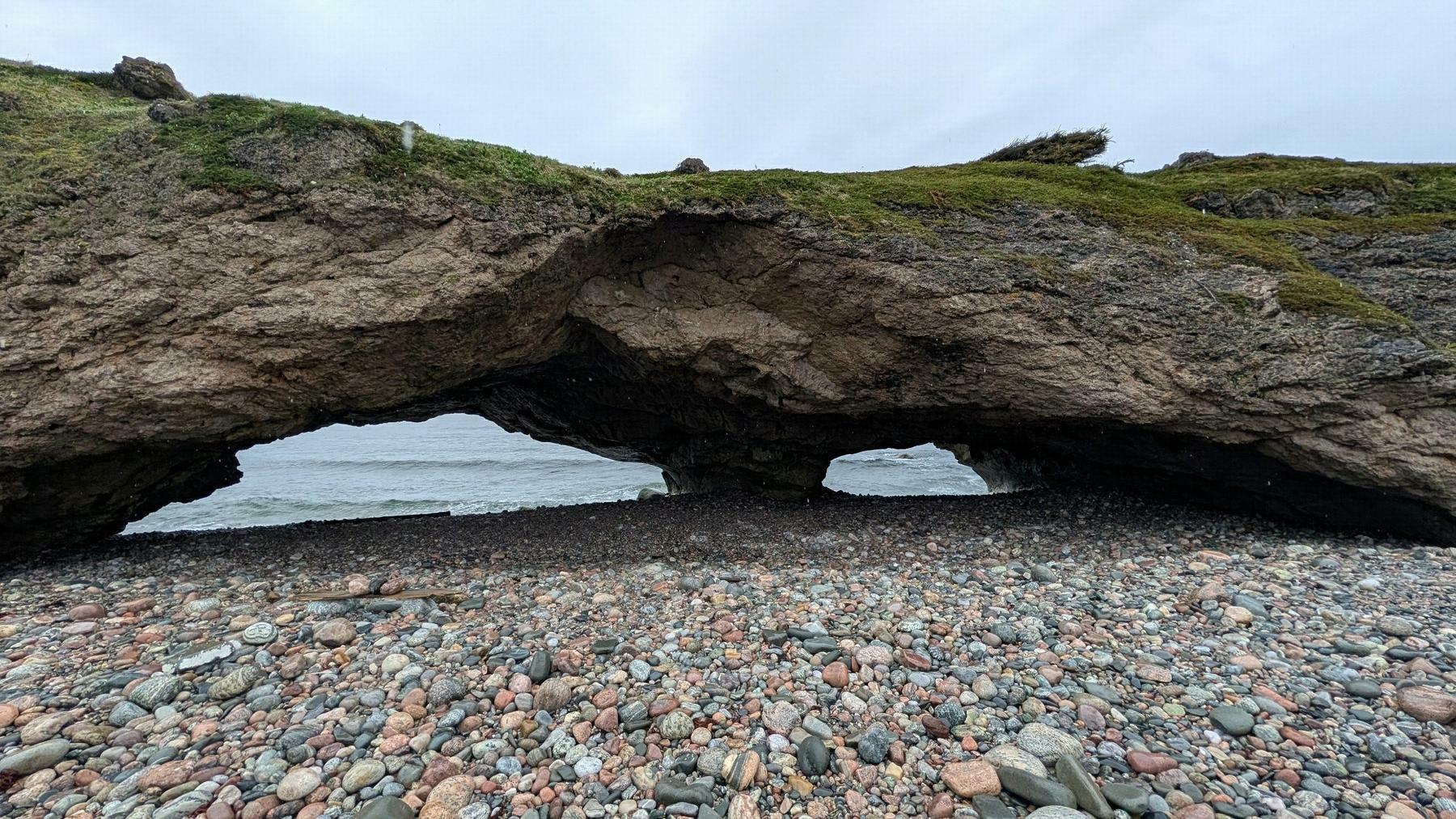
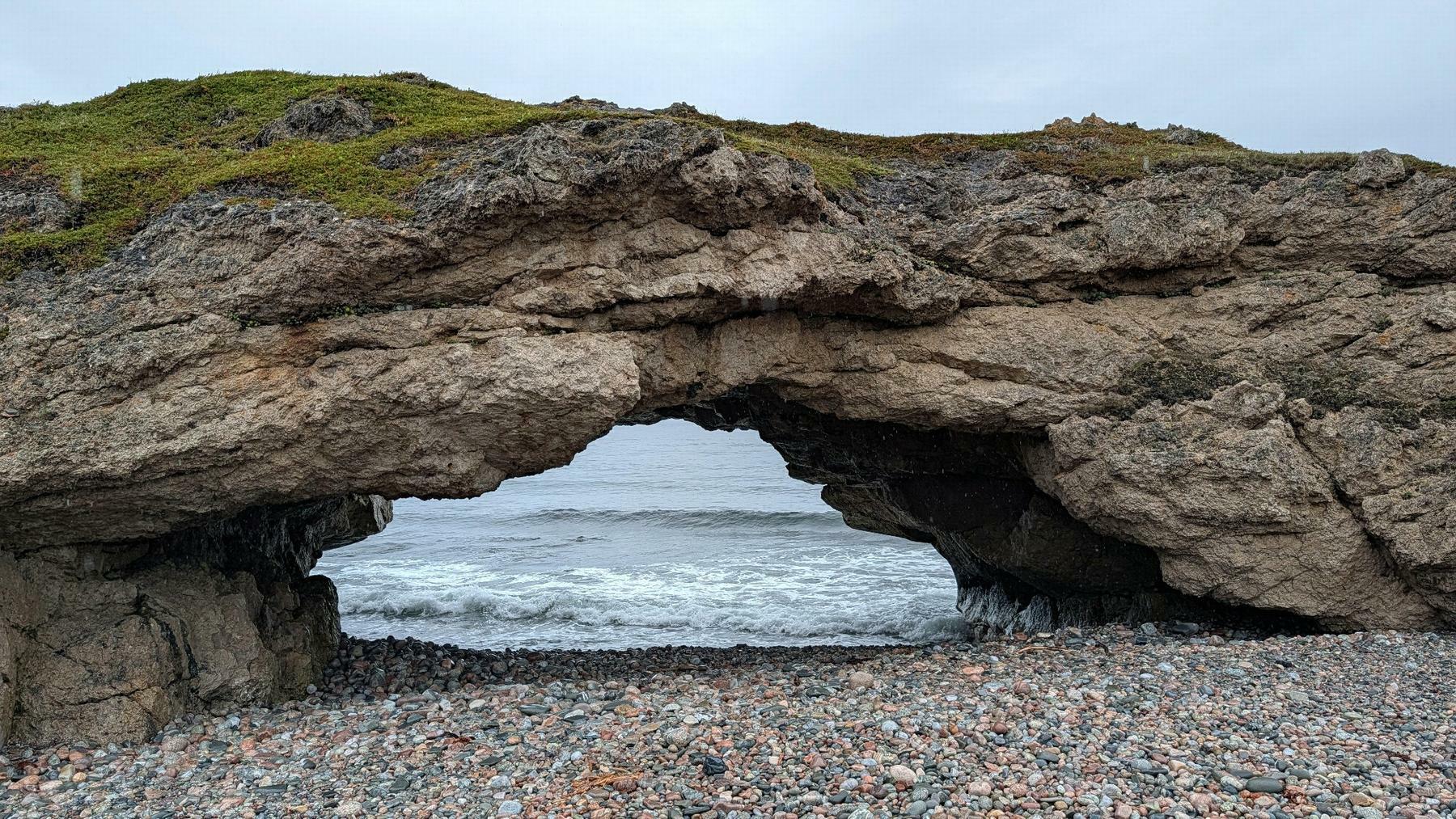
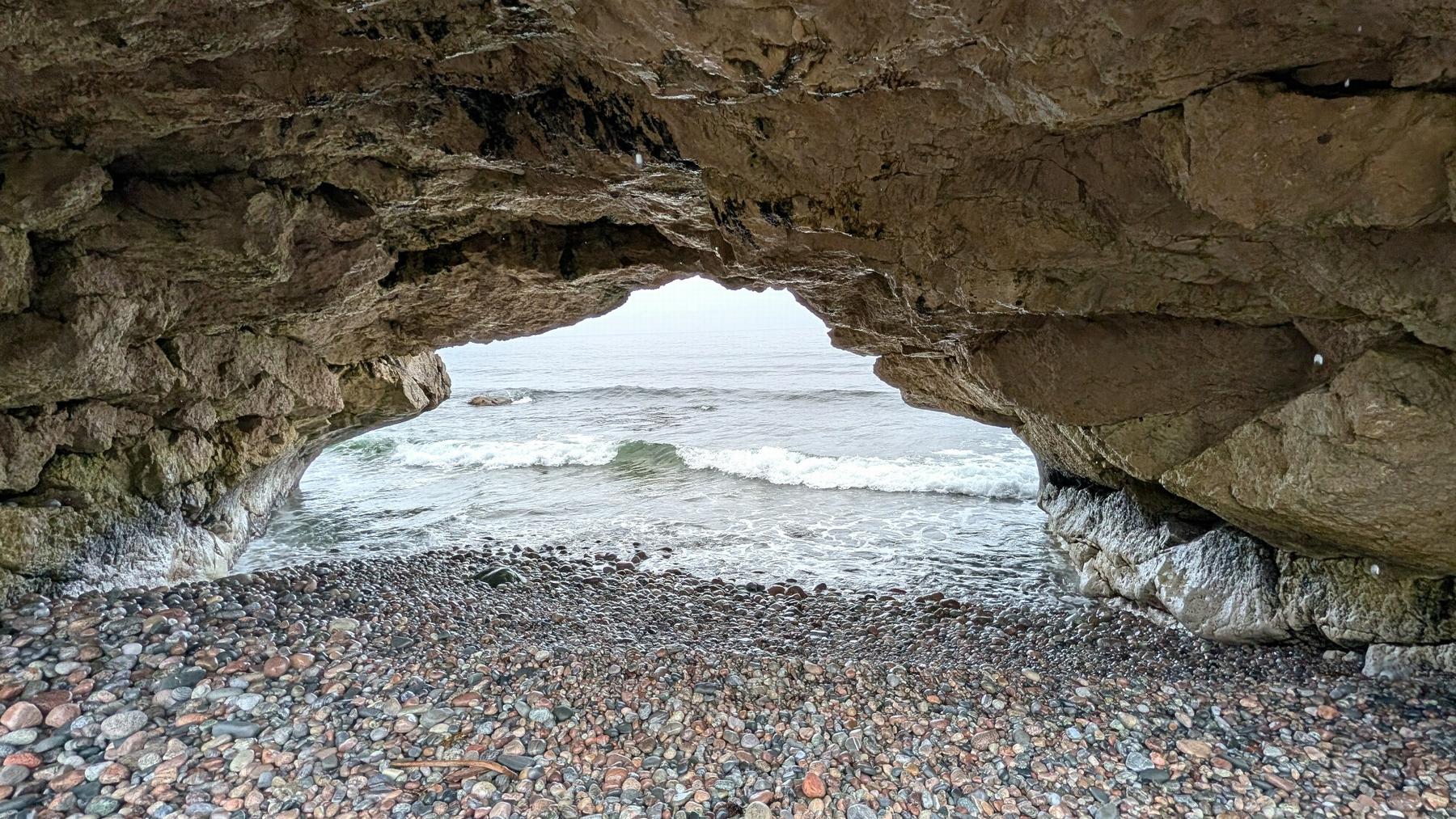
It’s also an easy stop to incorporate into a drive along the Great Northern Peninsula, with parking just off the highway and only a short walk to the beach.
Since one of the original four openings has already disappeared, we’re reminded that the coastline we’re seeing today won’t necessarily look exactly the same generations from now.
2. Tickle Cove Sea Arch
Our next sea arch was on the other side of Newfoundland, on the Bonavista Peninsula.
The Tickle Cove Sea Arch feels completely different from Arches Provincial Park.
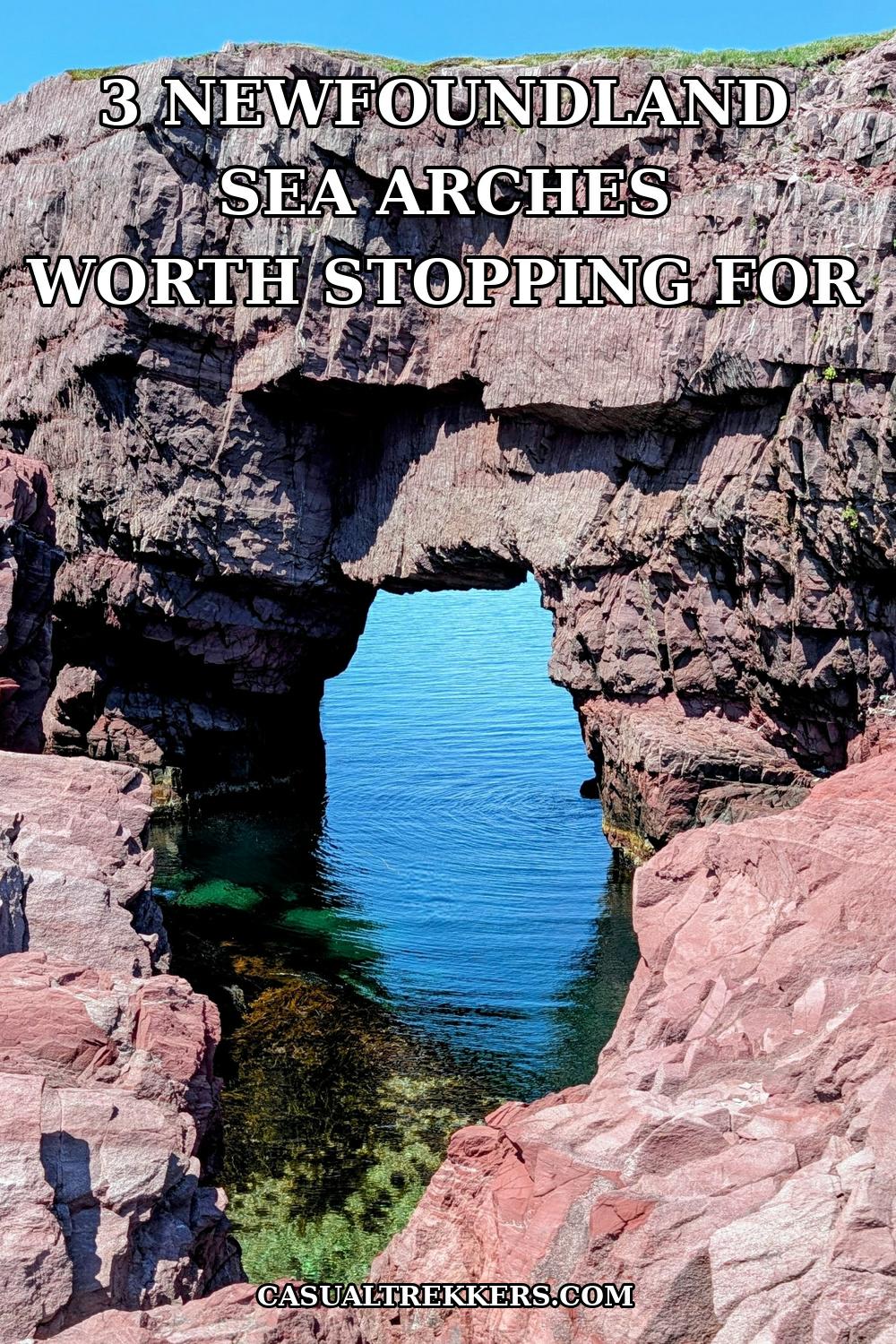
Instead of the gray stone and cobblestone beach we’d seen on the west coast, Tickle Cove greeted us with reddish-purple rock, green vegetation and, on the day we visited, beautifully blue water.
Getting there, however, was a little more interesting than we expected.
After turning off Route 235 toward Tickle Cove, we found the road to be extremely rough and filled with potholes. We simply took our time and drove slowly.
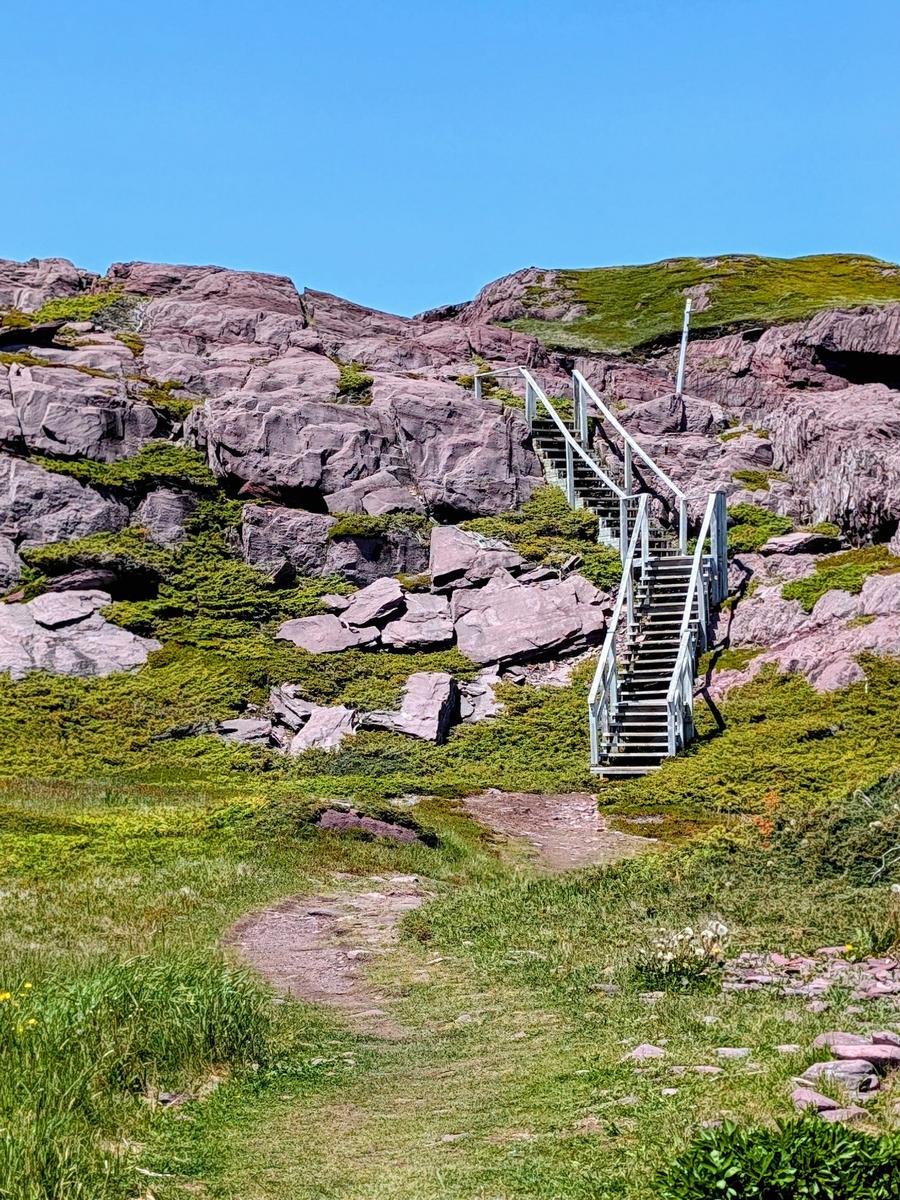
We had read that there was a designated parking area for the sea arch, but we didn’t find what we would consider an official parking lot. Just before reaching the beach, watch for the Sea Arch sign and turn left.
Once there, the short walk was well worth it.
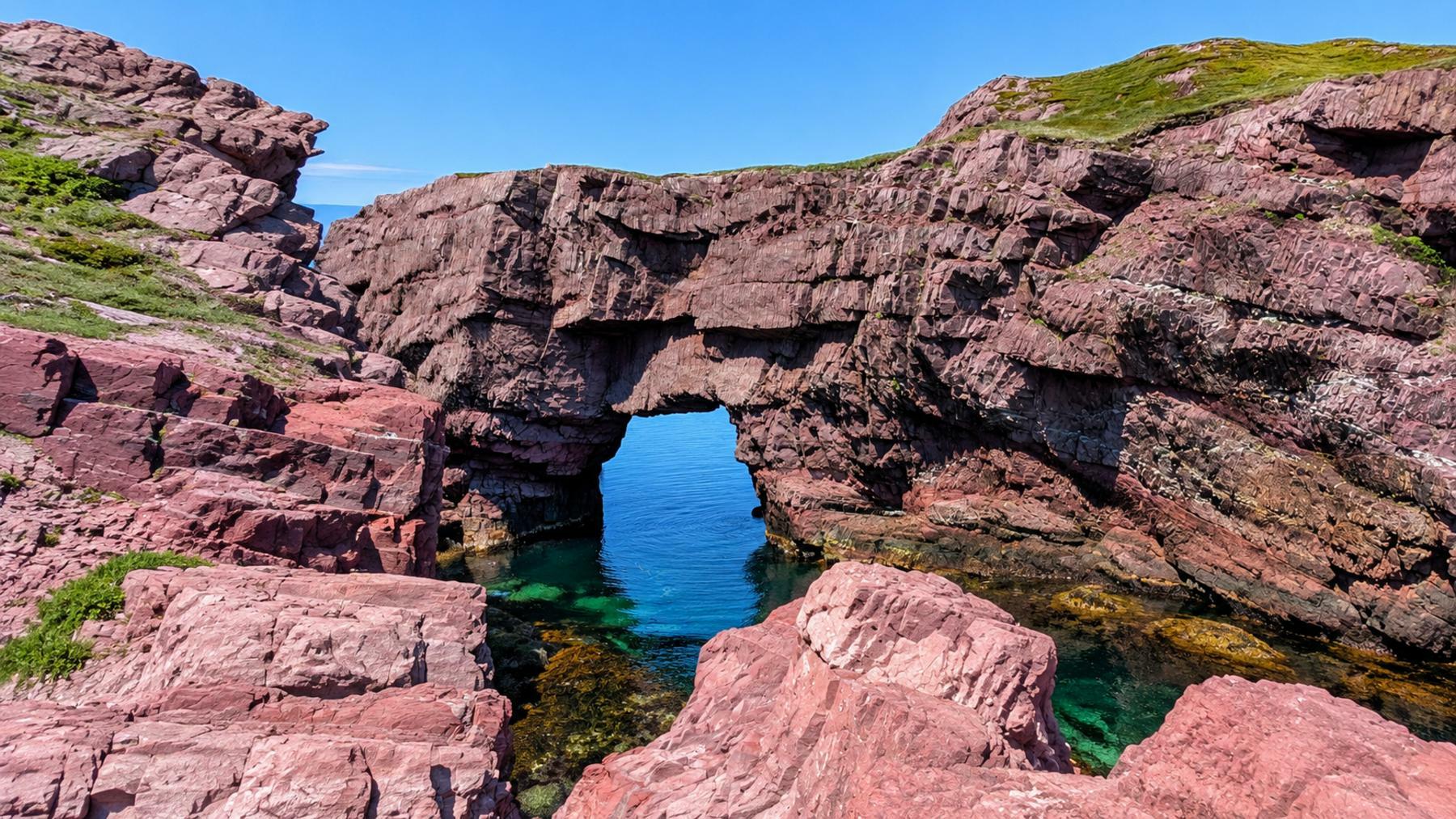
The reddish rock and clear water made this one especially photogenic. Depending on where we stood, we could look directly through the opening toward the open water or get closer views of the colorful rock surrounding it.
The Tickle Cove Sea Arch is part of the Discovery UNESCO Global Geopark, which encompasses a number of geologically significant locations around the Bonavista Peninsula.
Tickle Cove Sea Arch
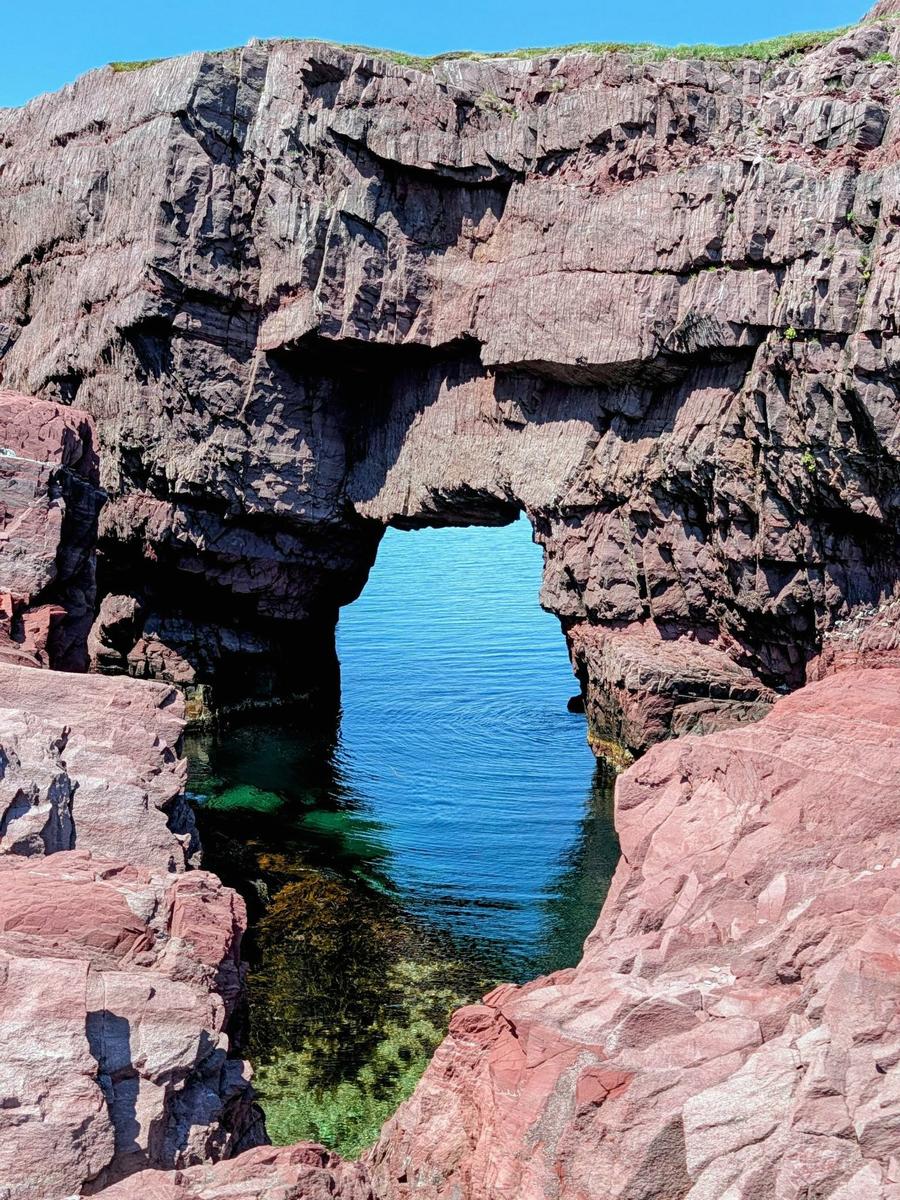
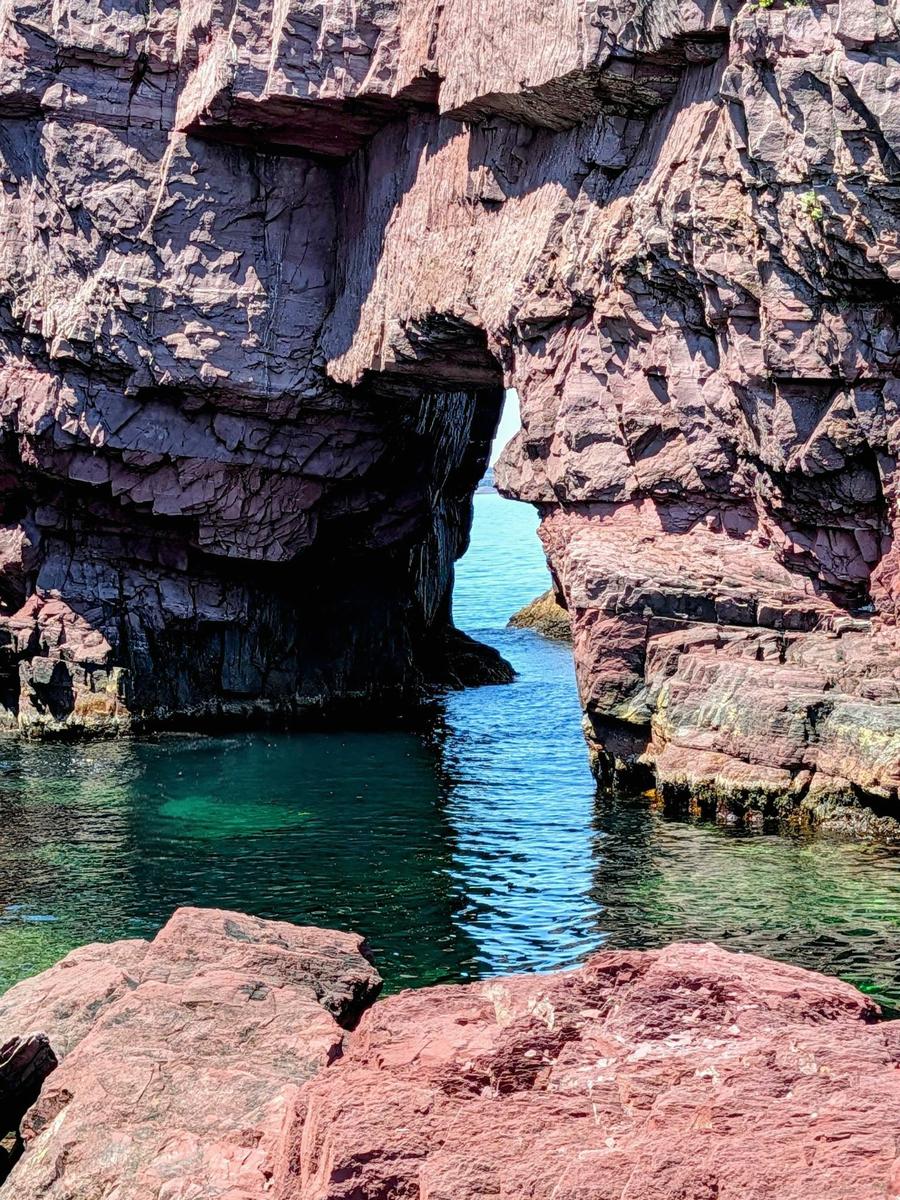
For us, that’s part of what makes these three stops interesting. They may all have been shaped by the ocean, but none of them really looks like the others.
Our Tickle Cove Tip:
If you’re visiting, we’d allow a little extra time for the drive in from Route 235. The road conditions we encountered were considerably rougher than we expected, and we were glad we weren’t in a hurry.
Road and parking conditions can always change, so we’d also recommend watching for current signs rather than relying entirely on what you may have read beforehand.
3. The Dungeon at Dungeon Provincial Park
Our third sea arch was the Dungeon, a distinctive coastal formation that gives Dungeon Provincial Park near Bonavista its name.
Unlike the other two, the Dungeon doesn’t initially look like a traditional sea arch at all.
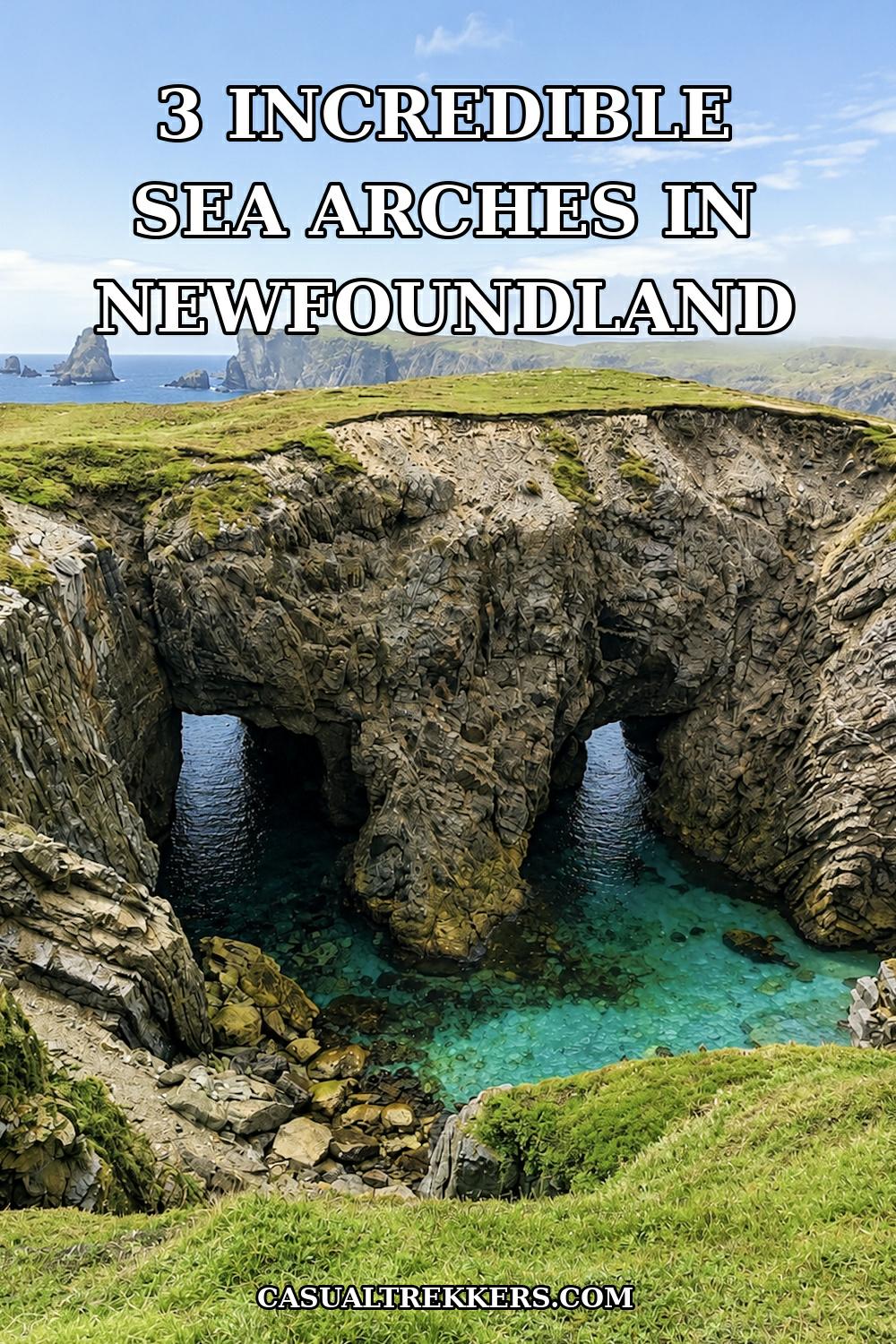
Instead, you approach a large opening in the coastal landscape and look down into what resembles a huge crater. At the bottom, ocean water flows through two openings in the surrounding cliffs.
It’s actually the remains of a collapsed sea cave.
For thousands of years, waves worked their way into the rock from the ocean, creating caves beneath the headland. Eventually the roof collapsed, leaving the large opening visible today with two passages connecting it to the sea.
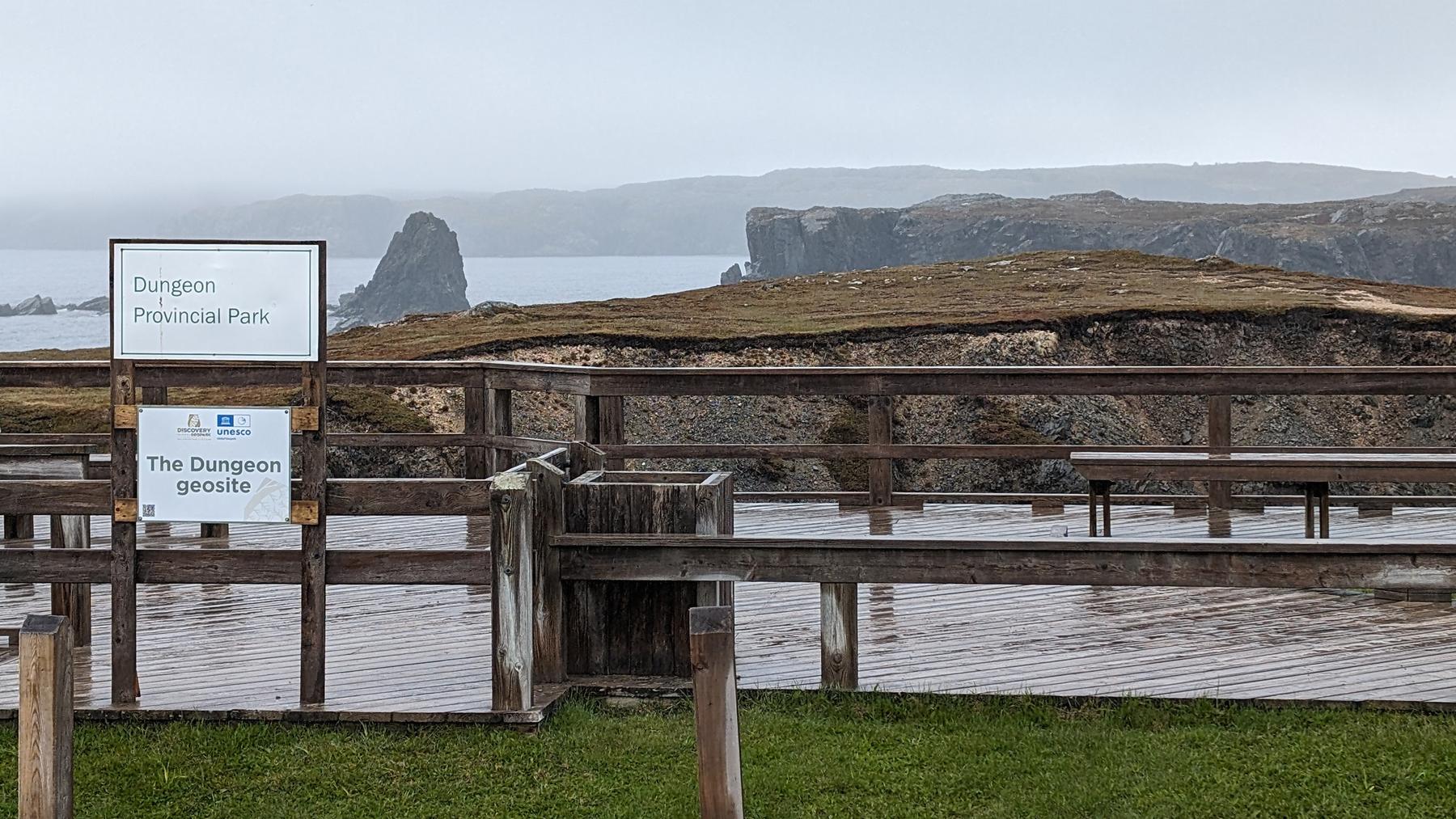
Standing above it gives you an entirely different perspective from getting an up-close look at the formations at Arches Provincial Park or looking through the opening at Tickle Cove.
And for us, the Dungeon came with another distinction: we’ve visited it twice.
Our First Visit to the Dungeon — May 2024
We first stopped at the Dungeon during a Newfoundland trip in May 2024.
It was a wet and windy day, with fog hanging over the coastline and the surrounding cliffs fading into the distance.
Rather than taking away from the experience, the weather seemed to fit the landscape.
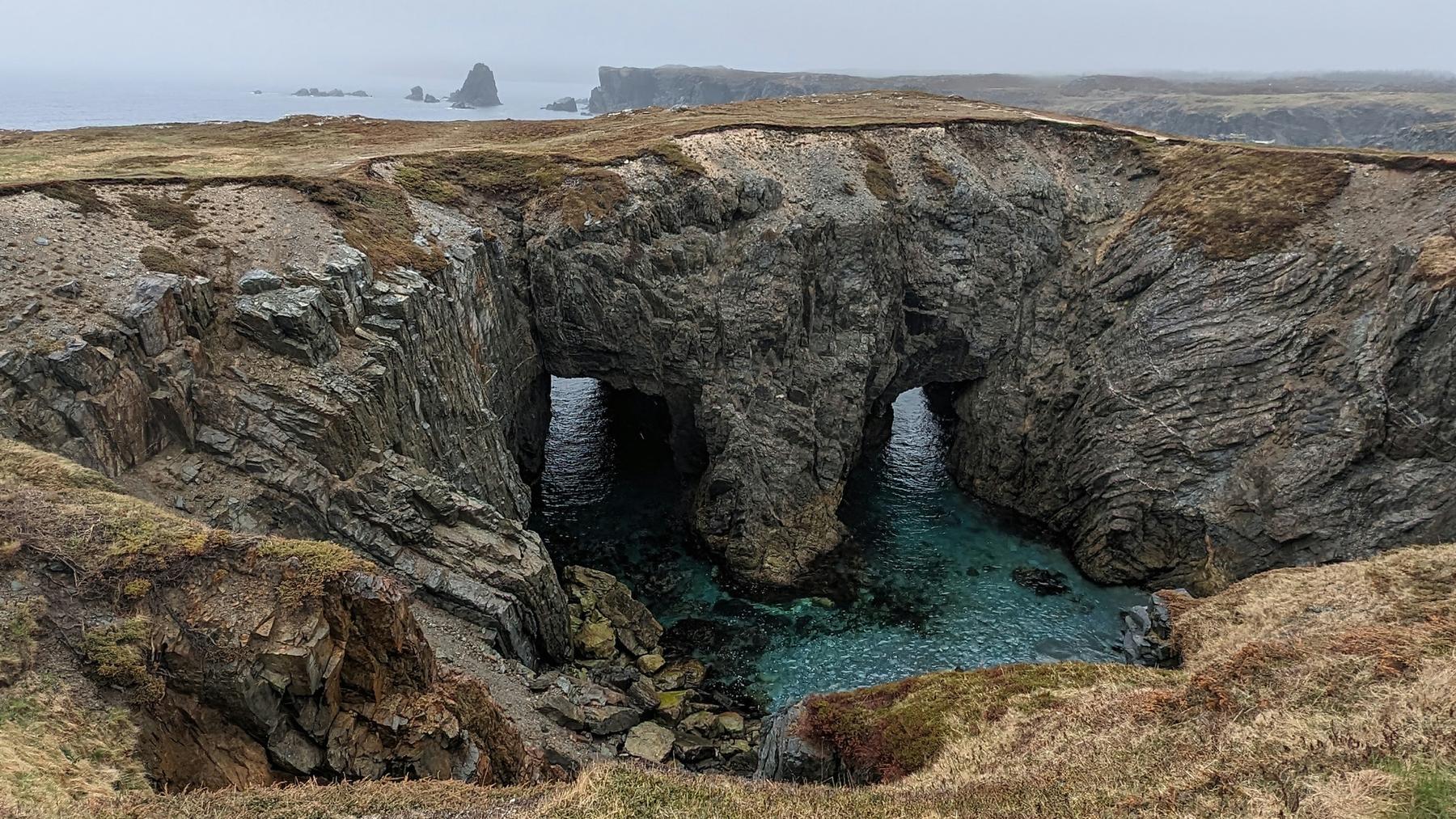
Looking down into the Dungeon, we could see the ocean entering through the openings below. Even beneath the gray sky, the water inside had a surprisingly blue-green color.
The surrounding coastline was equally impressive, with jagged rock formations extending into the fog beyond the Dungeon.
Returning to the Dungeon in 2026
When our 2026 Newfoundland road trip brought us back to the Bonavista Peninsula, we decided to visit the Dungeon again.
One thing to know before visiting Dungeon Provincial Park is that the road leading into the park is unpaved. It isn’t a difficult place to reach, but it’s worth being prepared for a dirt road and taking your time depending on conditions.
Our second visit gave us another opportunity to appreciate just how unusual the formation is. There’s something about looking down into that enormous collapsed sea cave, with the ocean still flowing through the openings below, that makes the Dungeon particularly impressive.
There is a viewing platform overlooking the Dungeon, but you can also walk around the surrounding grassy area for different views of the formation. There are no barriers along much of the edge, so some caution is definitely needed. Chris even walked out across the grassy area above the arch, which gave us another perspective on just how large the formation really is.
Dungeon Provincial Park
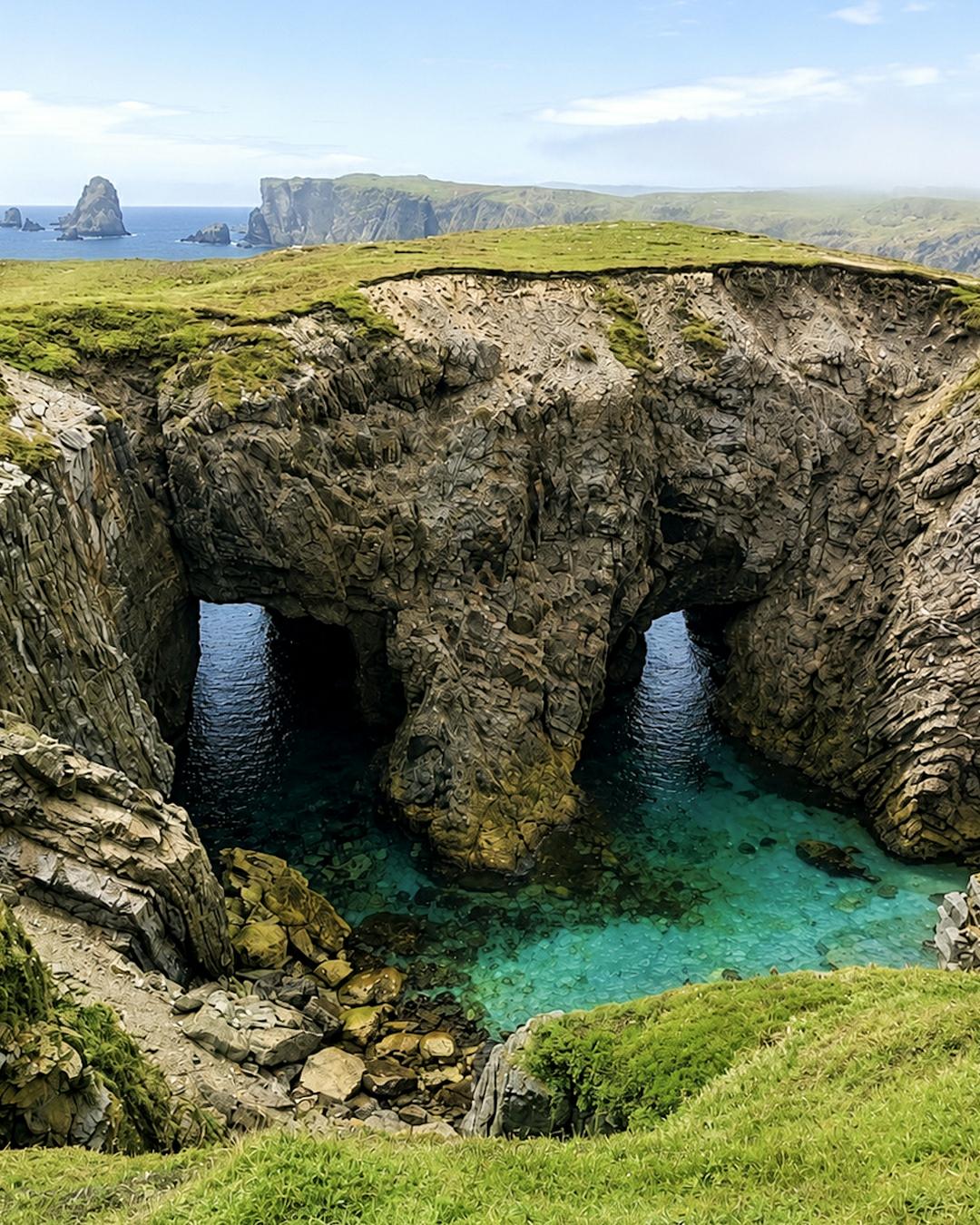
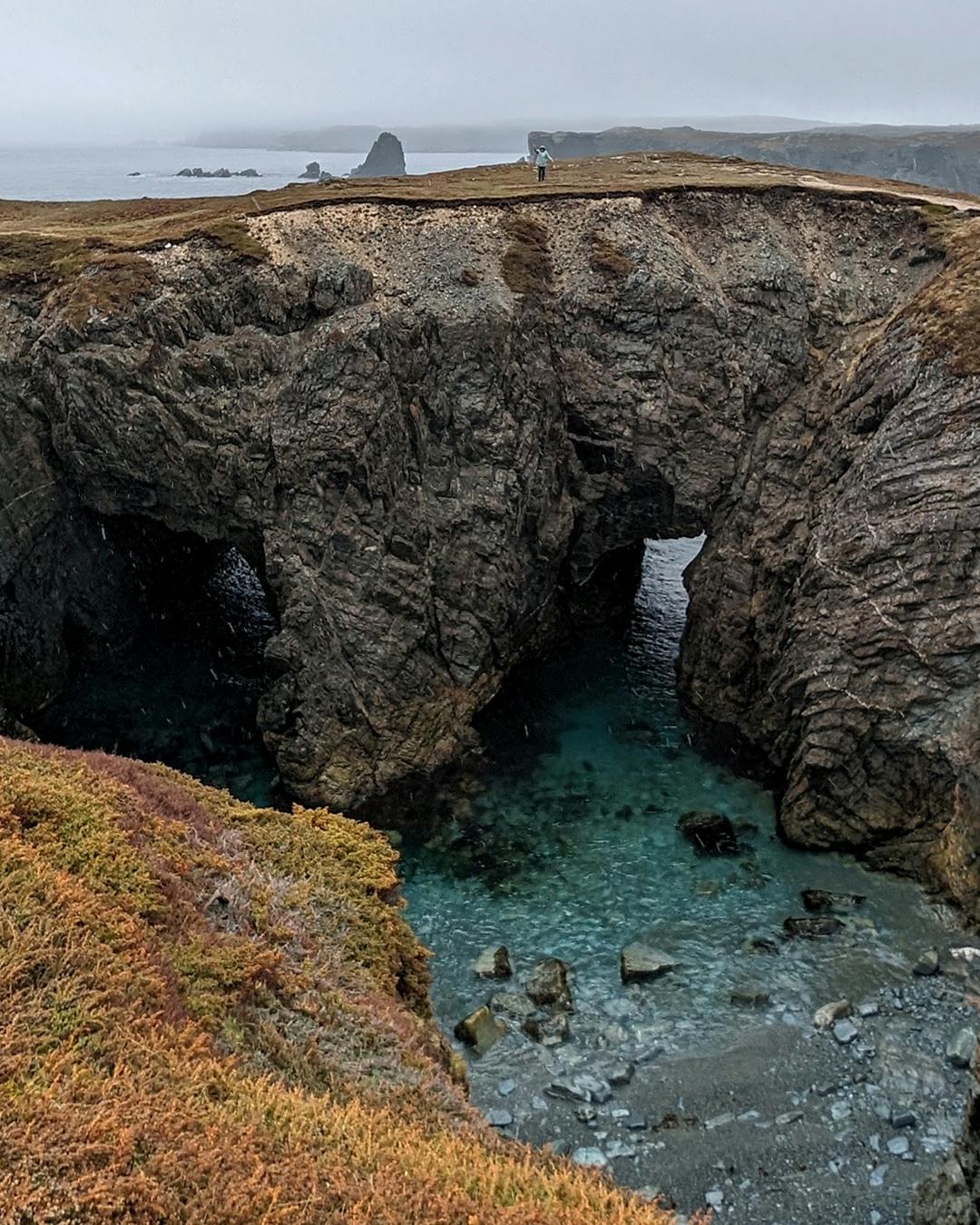
The Dungeon is also part of the Discovery UNESCO Global Geopark, making it one of several worthwhile geological stops while exploring the Bonavista Peninsula.
Exploring More of the Bonavista Peninsula
The sea arches weren’t the only reason we enjoyed the Bonavista Peninsula. We also stopped at the Bonavista Lighthouse and had lunch at Mifflin’s Tea Room in Bonavista, which was well worth the stop. Nearby Elliston was another highlight, where we visited the puffin viewing site and were able to see the birds surprisingly close to shore.
There’s plenty more to see around the peninsula, so the Dungeon and Tickle Cove are easy to combine with other stops rather than making either one a destination on its own.
These are the kinds of places that make the Bonavista Peninsula particularly enjoyable to explore. You don’t necessarily have to make one attraction the destination for the entire day—there are plenty of interesting stops that can be combined as you make your way around the peninsula.
Three Sea Arches — Three Very Different Stops
What we enjoyed most about seeing these three places was how different they were.
At Arches Provincial Park, we could walk along the cobblestone beach and get an up-close look at a massive formation containing three openings.
At Tickle Cove, colorful rock surrounded a classic sea arch overlooking beautifully clear water.
And at the Dungeon Provincial Park, we stood above a collapsed sea cave and watched the ocean enter through openings far below us.
They’re separated by a considerable distance, so we certainly wouldn’t suggest driving across Newfoundland just to see all three in one trip. But each fits naturally into areas that many visitors already explore.
Arches Provincial Park makes an easy stop when traveling the Great Northern Peninsula, particularly if you’re continuing north from Gros Morne.
Tickle Cove and the Dungeon can both be included while exploring the Bonavista Peninsula, and both are part of the Discovery UNESCO Global Geopark.
A Little Geology Along the Way
We’re certainly not experts, but one thing our Newfoundland travels have taught us is that knowing just a little about how the landscape formed can make stops like these even more interesting.
Sea arches generally begin with weaknesses or fractures in coastal rock. Waves gradually enlarge those openings into caves. Continued erosion can eventually cut completely through a headland, creating an arch.
And the process doesn’t stop there.
Eventually an arch can collapse, sometimes leaving isolated sea stacks behind.
You can see different results of that ongoing process at these three locations—the surviving arches along Newfoundland’s west coast, the colorful opening at Tickle Cove and the dramatically collapsed coastal landscape of the Dungeon.
The Bonavista Peninsula is particularly interesting in this respect. The Discovery UNESCO Global Geopark includes coastal formations, caves, arches and sea stacks, along with rocks and fossils that tell a much larger geological story.
Which Newfoundland Sea Arch Was Our Favorite?
All three were worth visiting, but if we had to choose just one, we’d pick the Dungeon.
Arches Provincial Park probably did the best job of demonstrating sheer scale, while Tickle Cove had the most colorful setting. But there was something about standing above the Dungeon and looking down into that enormous collapsed sea cave that set it apart for us.
Our wet and windy visit to the Dungeon in May 2024 gave it a wild, moody appearance, while returning during our 2026 road trip gave us a chance to experience the Dungeon under very different conditions and spend a little more time exploring the area.
Fortunately, choosing a favorite isn’t really necessary when planning a Newfoundland road trip.
Arches Provincial Park fits naturally into a trip along the Great Northern Peninsula, while Tickle Cove and the Dungeon can both be visited while exploring the Bonavista Peninsula.
For us, all three were exactly the kind of stops we enjoy finding on a road trip—interesting places that gave us a reason to get out of the car, explore a little and see another side of Newfoundland’s remarkable coastline.
Map
The three sea arches we visited were spread across Newfoundland—from Arches Provincial Park on the Great Northern Peninsula to Tickle Cove and the Dungeon on the Bonavista Peninsula.
Planning a Newfoundland road trip?
Save one of these pins so you can find these three sea arches along the way.