Chasing icebergs was one of the main reasons we planned our first trip to Newfoundland in May 2024. After seeing reports of the impressive iceberg season in 2023, we hoped to experience some of that same magic for ourselves.
Unfortunately, 2024 turned out to be a much quieter year for icebergs, and finding them proved more difficult than we’d anticipated.
When we returned to Newfoundland in June 2026, things were quite different. This time, we spotted icebergs around St. Anthony, Twillingate, and Fogo Island, sometimes without even having to go looking for them.
Here’s how our two iceberg-watching experiences compared, along with a few things we learned about finding icebergs along Newfoundland’s famous Iceberg Alley.
The Search Begins — Twillingate, May 2024
We arrived in St. John’s on May 12, 2024, and eventually made our way to Twillingate, one of Newfoundland’s best-known iceberg-watching destinations.
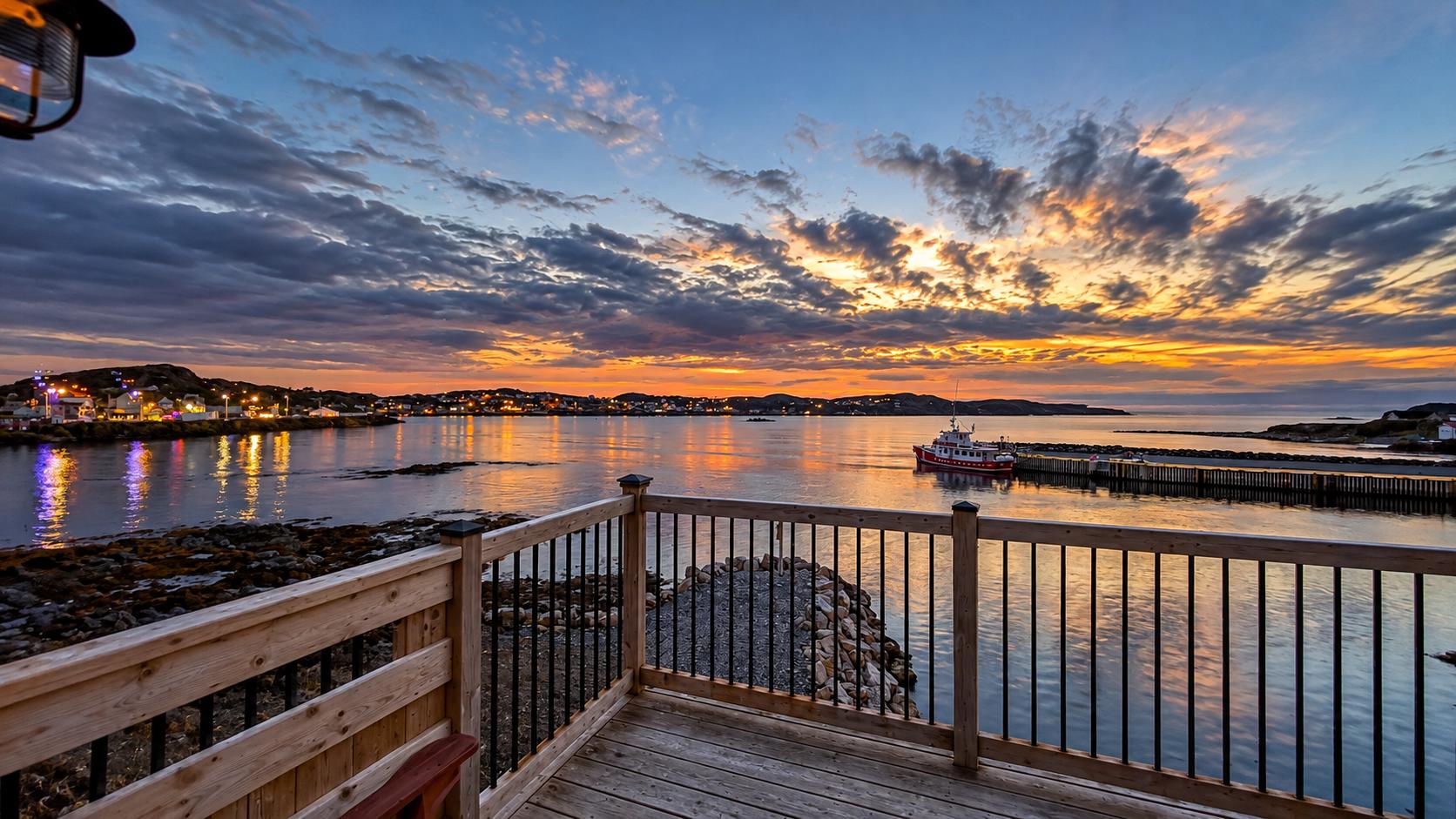
We spent two nights beginning May 15 at the waterfront Toulinguet Inn, staying in Suite #6. The location was lovely, with views overlooking the harbor, but there were no icebergs to be seen.
We checked iceberg reports and local Facebook groups, hoping to find something within driving distance. The Newfoundland and Labrador Iceberg Reports Facebook group was especially helpful, with people sharing recent sightings and photographs from around the island.
Unfortunately, there simply wasn’t much iceberg activity in the Twillingate area during our visit.
Our Iceberg Quest Boat Tour
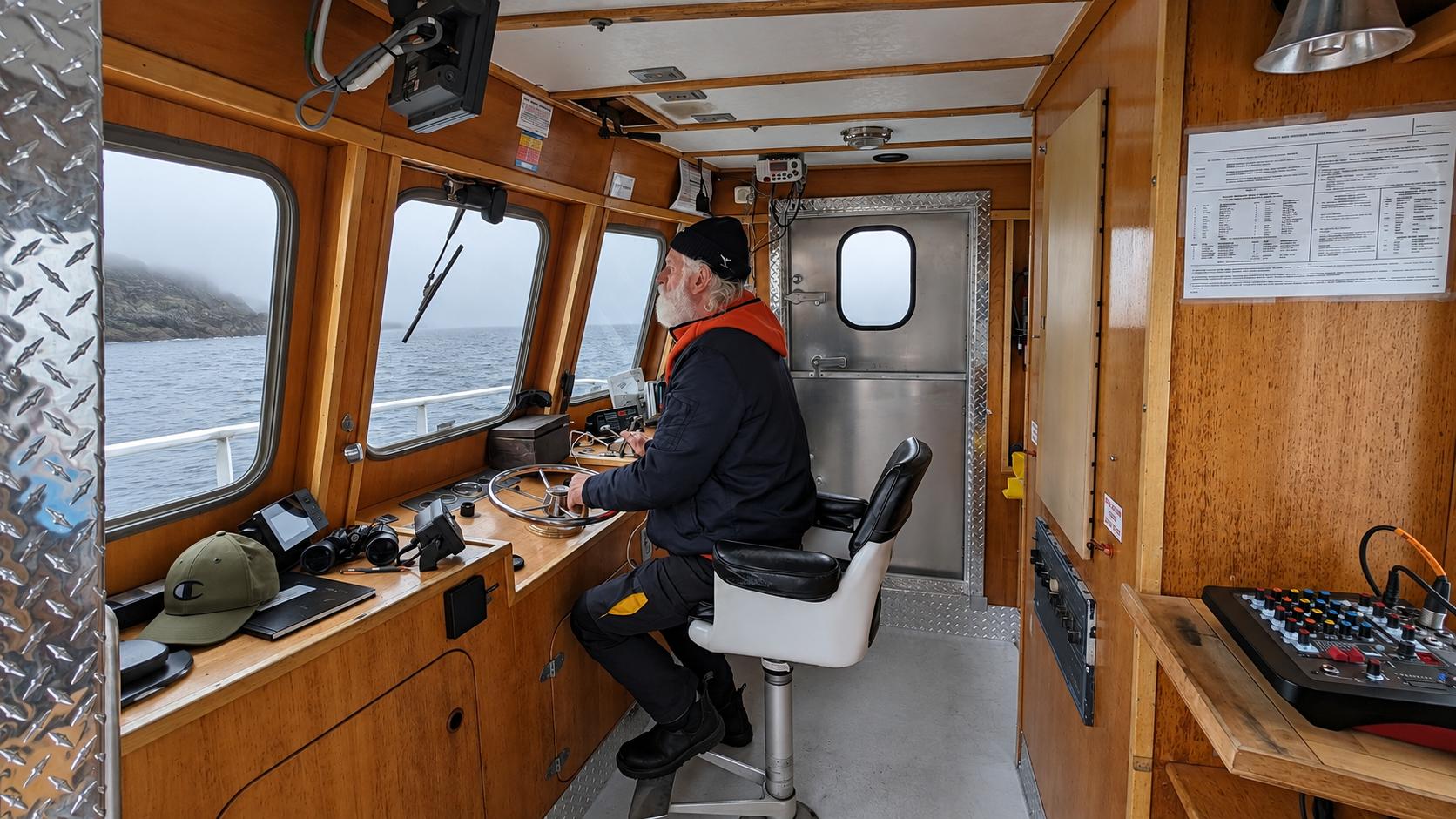
While in Twillingate, we booked a cruise with Iceberg Quest Boat Tours.
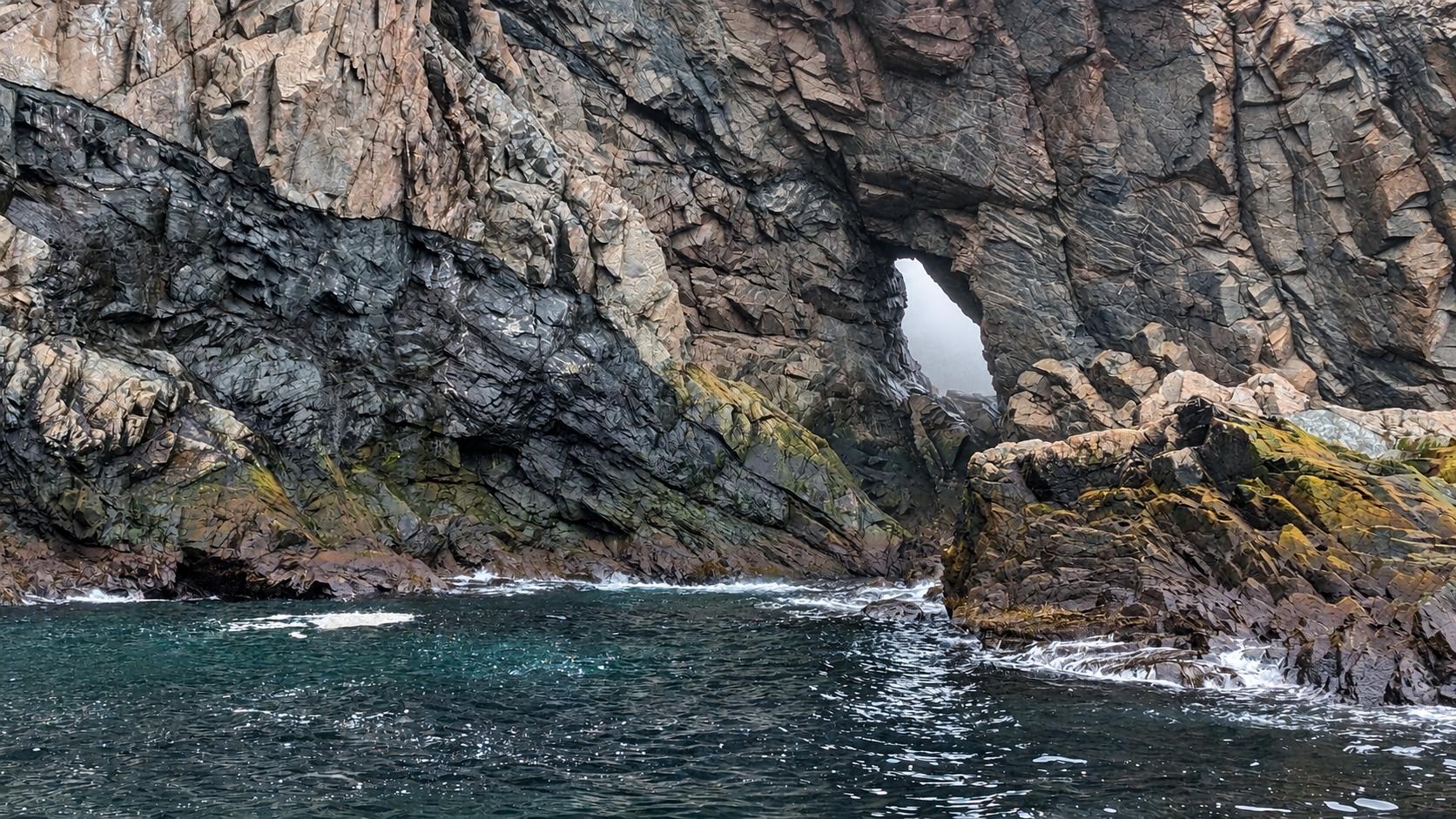
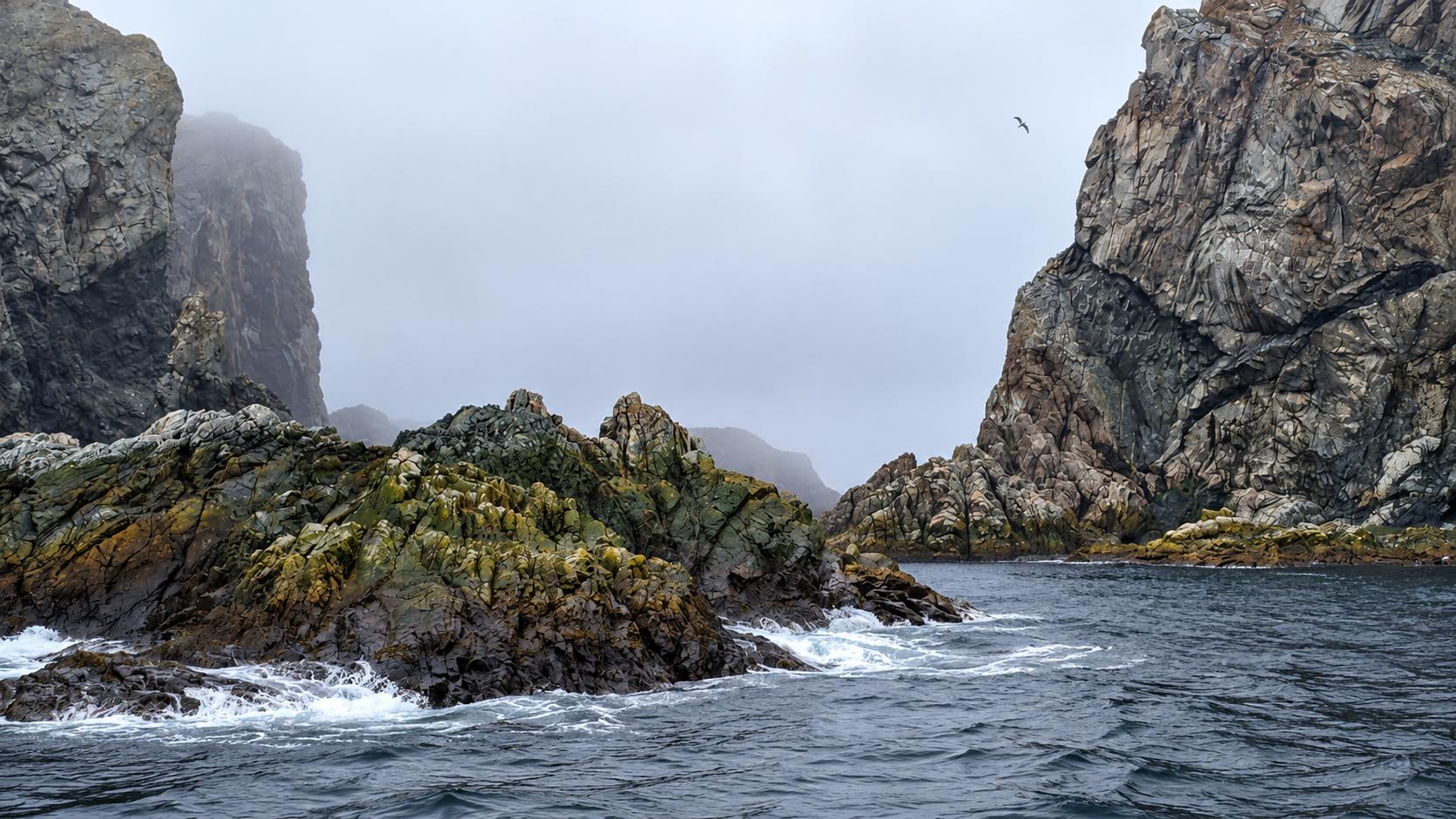
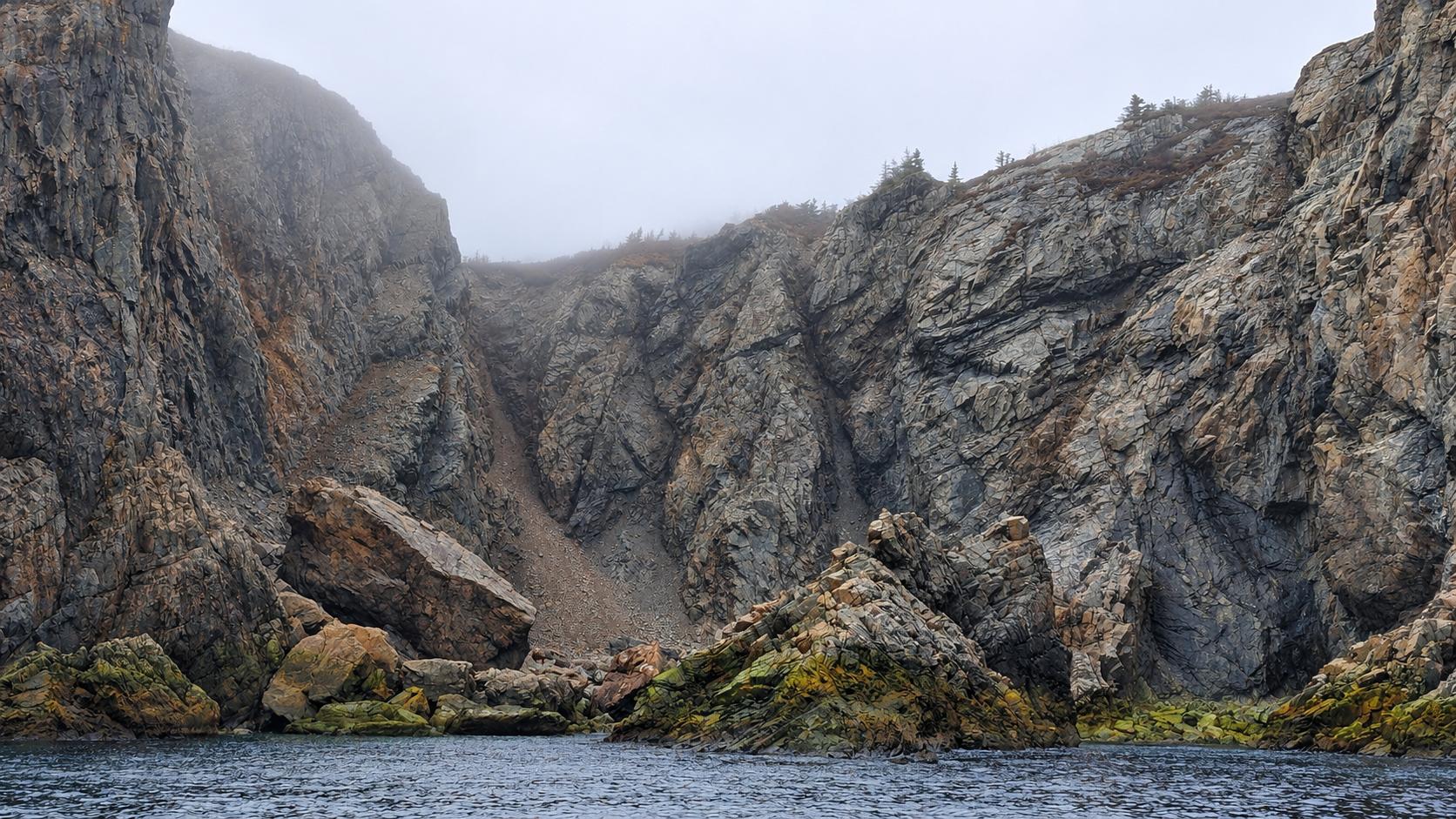
Although we didn’t encounter any icebergs, whales, or seals, the tour was still an enjoyable way to experience the rugged coastline from the water.
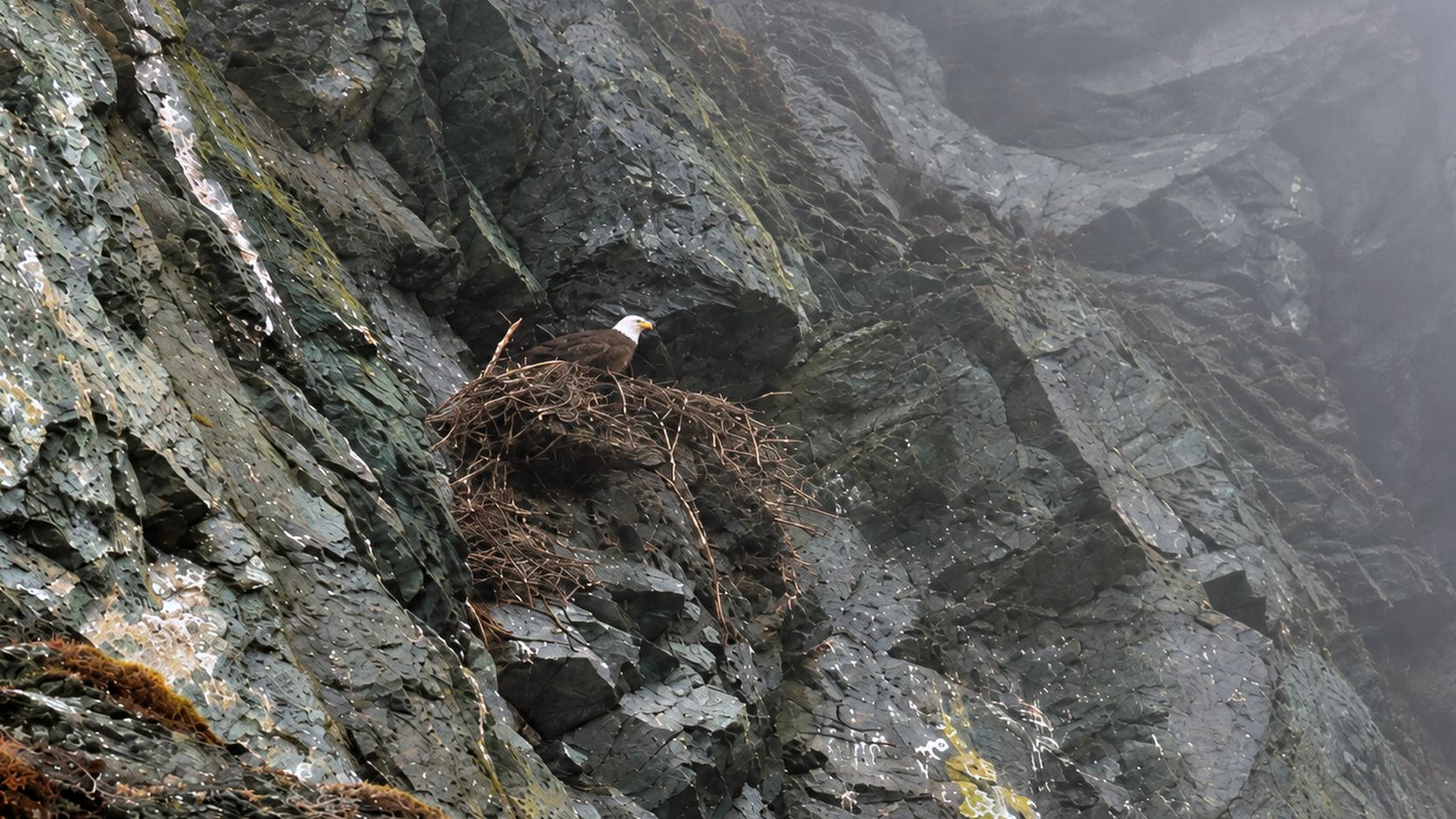
We passed dramatic rock formations, spotted a bald eagle nesting along the cliffs, and enjoyed hearing the crew sing traditional Newfoundland songs with the passengers.
I even had the opportunity to be screeched in as an honorary Newfoundlander, which made the experience especially memorable.
Iceberg Quest Boat Tour – Twillingate 2024:

Visiting Long Point Lighthouse
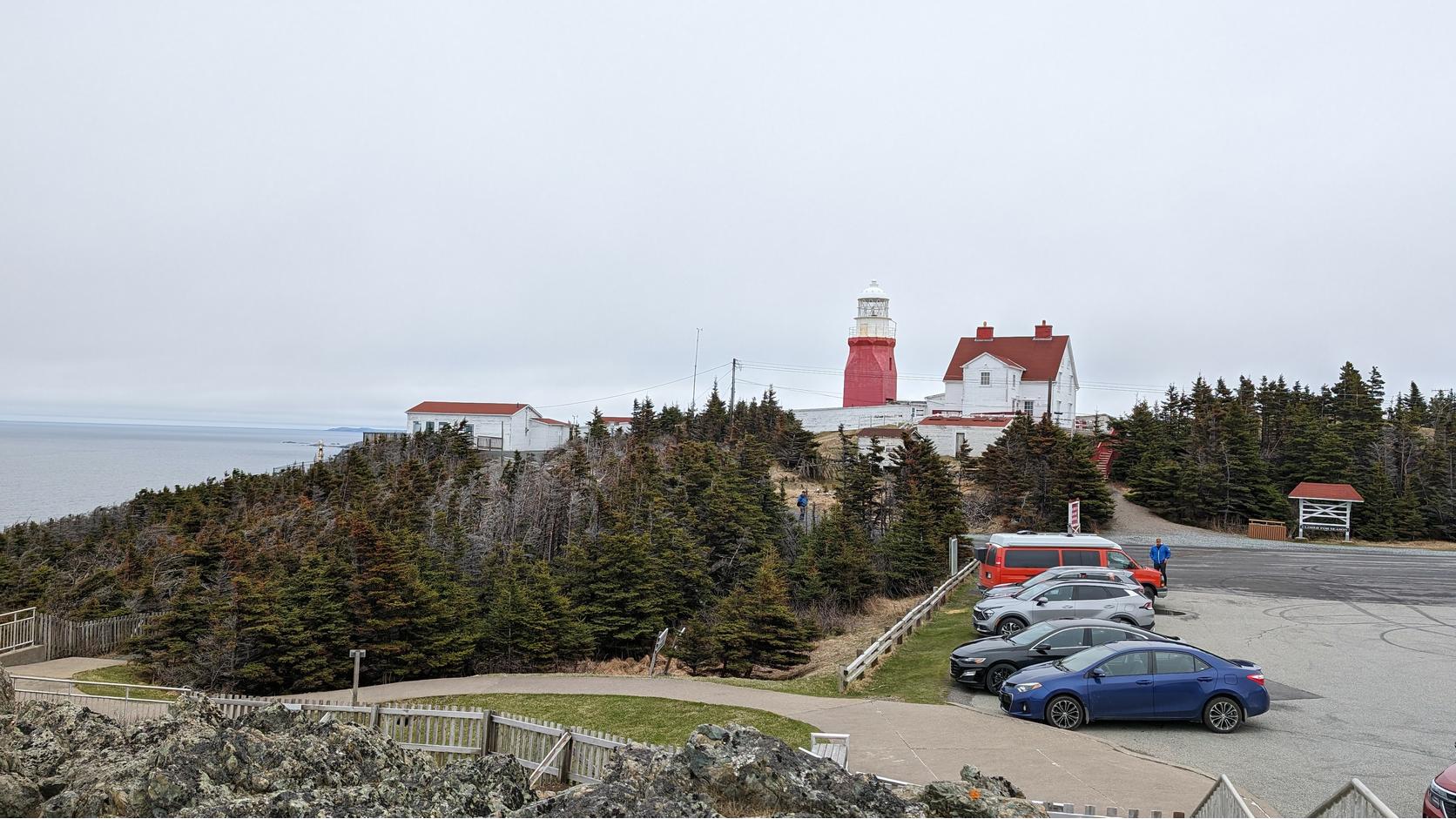
We also visited Long Point Lighthouse, located near Crow Head, just outside Twillingate.
Perched high above the Atlantic, the lighthouse offers sweeping views of the surrounding coastline. Although there were no icebergs in sight, the scenery made it a worthwhile stop.
Finally Spotting Icebergs — Lumsden and Cape Freels
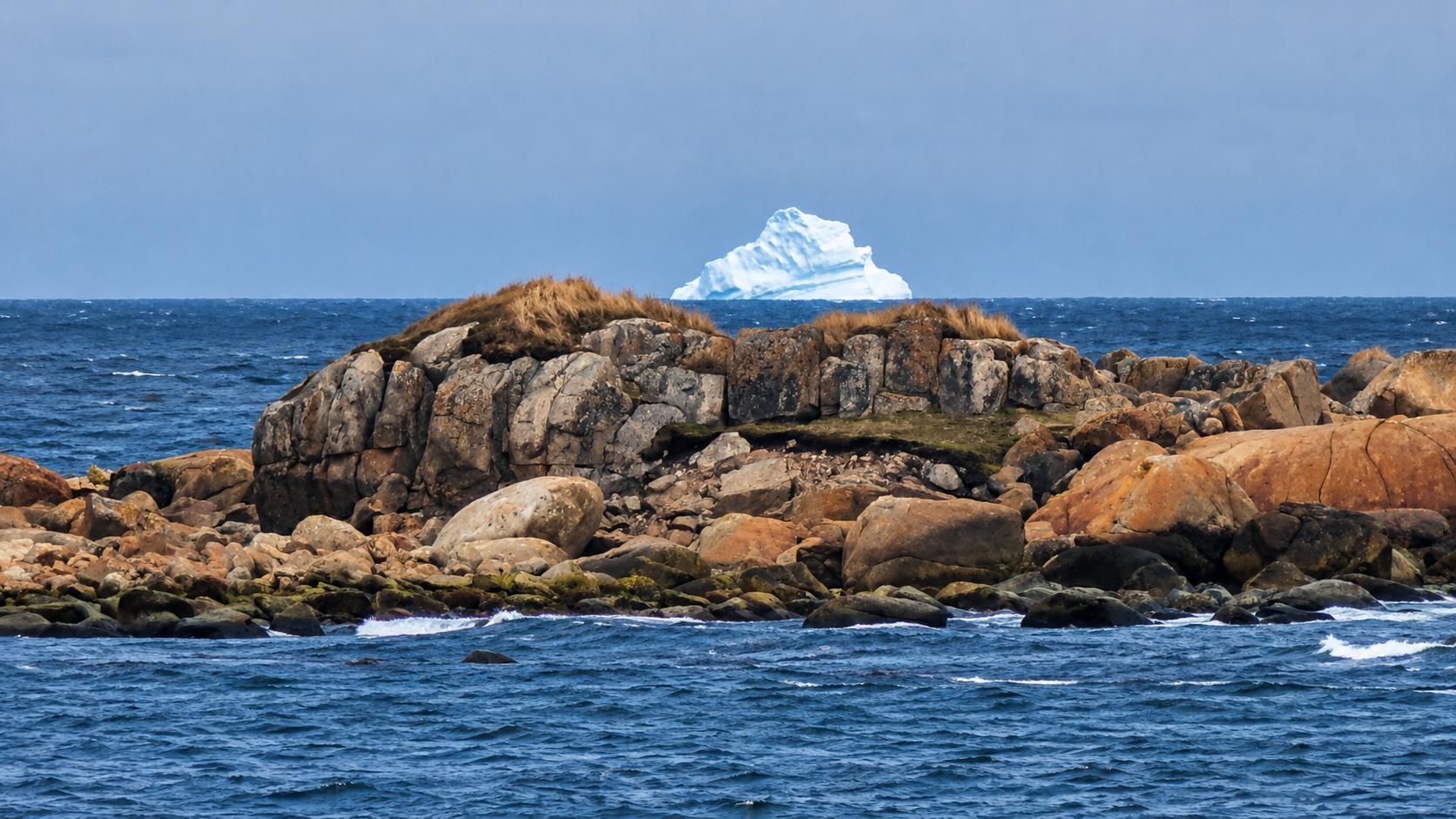
On May 17, as we continued our journey away from Twillingate, our luck finally changed.
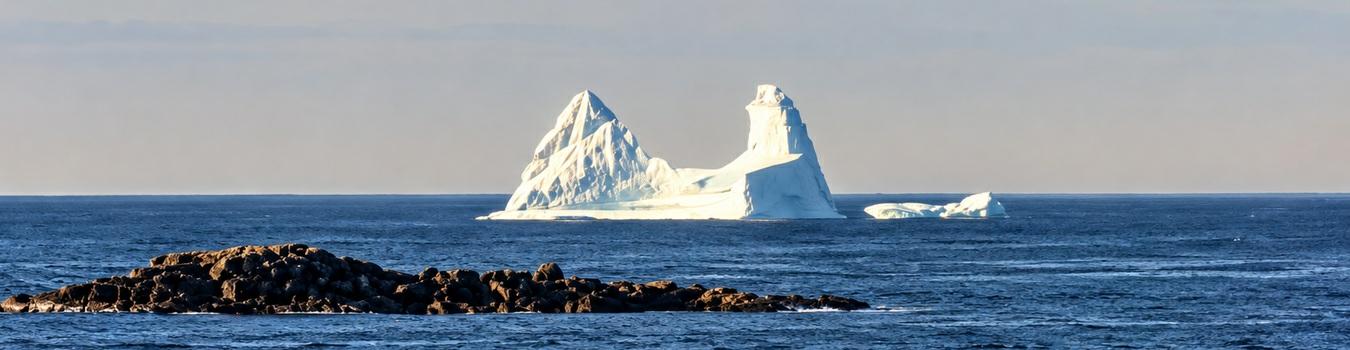
Our first iceberg sighting came from the end of Marine Drive in Lumsden. The iceberg was quite a distance offshore, but after several days of searching, we were happy to finally see one.
Later that afternoon, around 2 p.m., we stopped at Cape Freels North Beach and spotted another iceberg offshore, along with a smaller piece of floating ice.
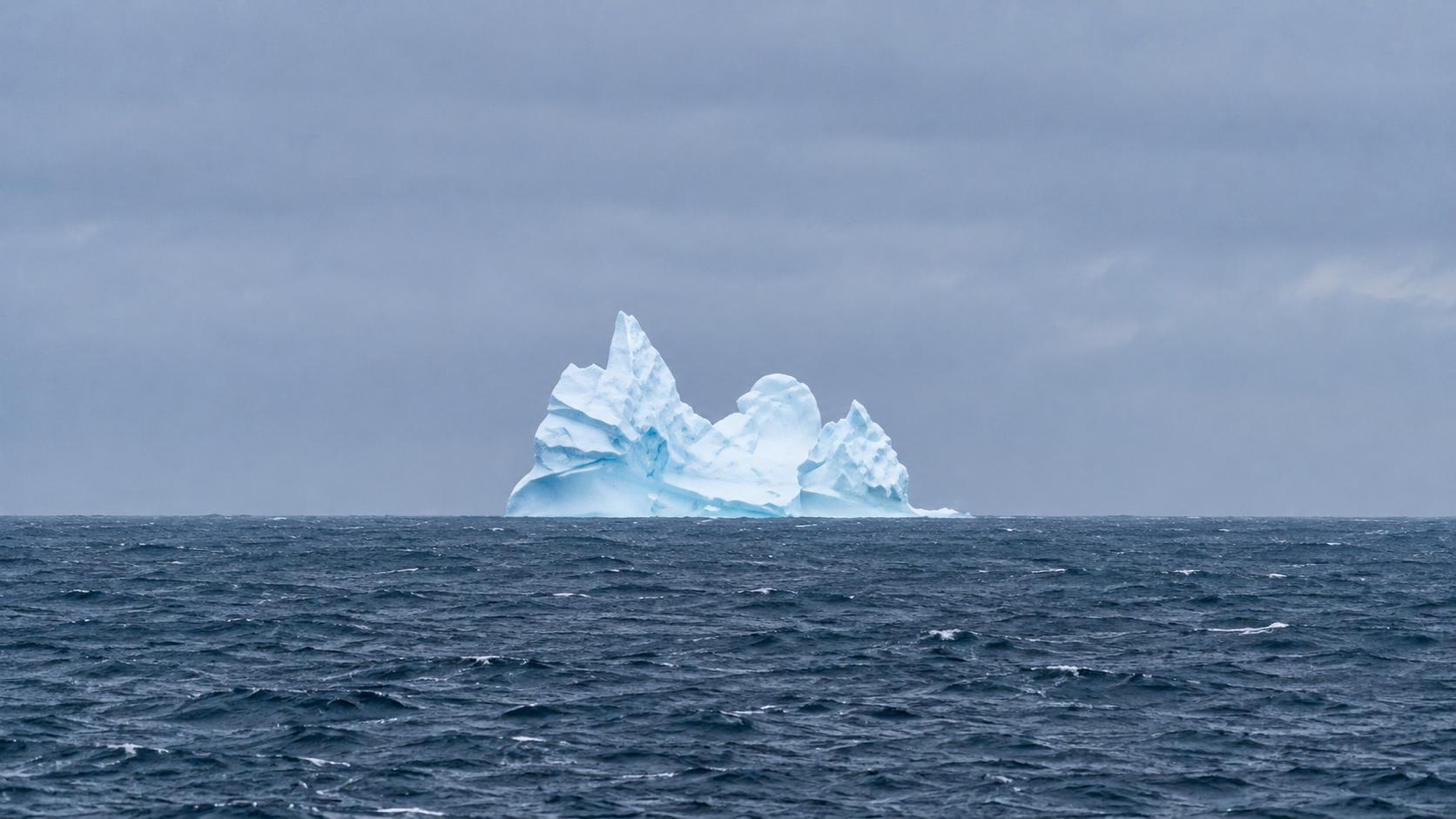
Neither iceberg was particularly close to shore, but seeing them was a welcome ending to our search. Even during a quiet iceberg season, a little persistence had paid off.
Returning to Newfoundland in 2026 — Better Luck with Icebergs
After seeing reports of increased iceberg activity in 2025, we decided to give iceberg watching another try during our return to Newfoundland in June 2026.
We planned this trip for late June and early July, hoping the timing would also give us an opportunity to see whales feeding close to shore at St. Vincent’s Beach. Along with whale watching, we were looking forward to experiencing the seabird activity at nearby Cape St. Mary’s Ecological Reserve.
This time, we had much better luck with the icebergs.
Icebergs Around St. Anthony
We spent three nights in St. Anthony, staying at Fishing Point Vacation Home near Fox Point Lighthouse.
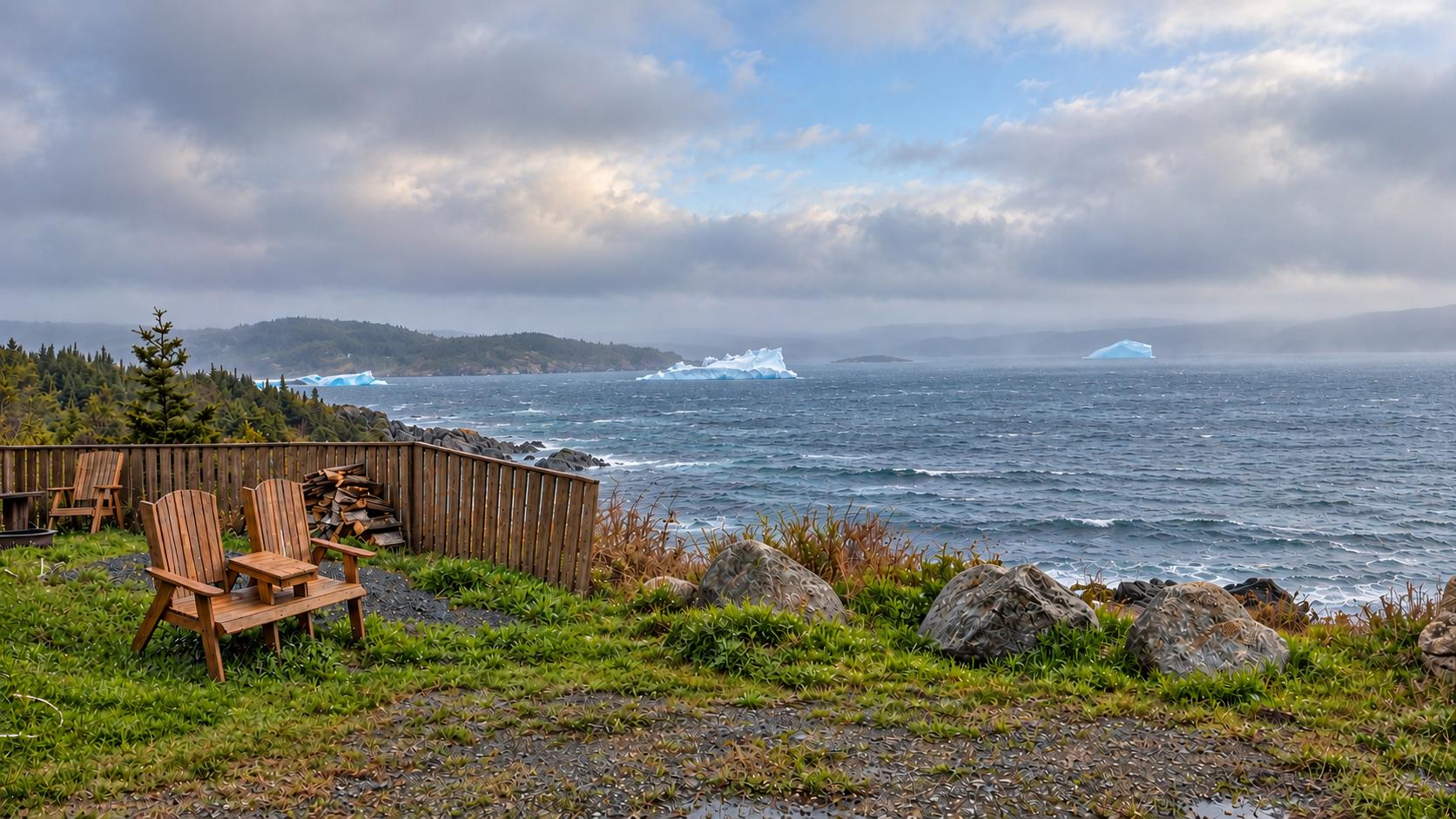
Almost immediately, we knew this visit would be different. We could see an iceberg right from the window of our accommodations!
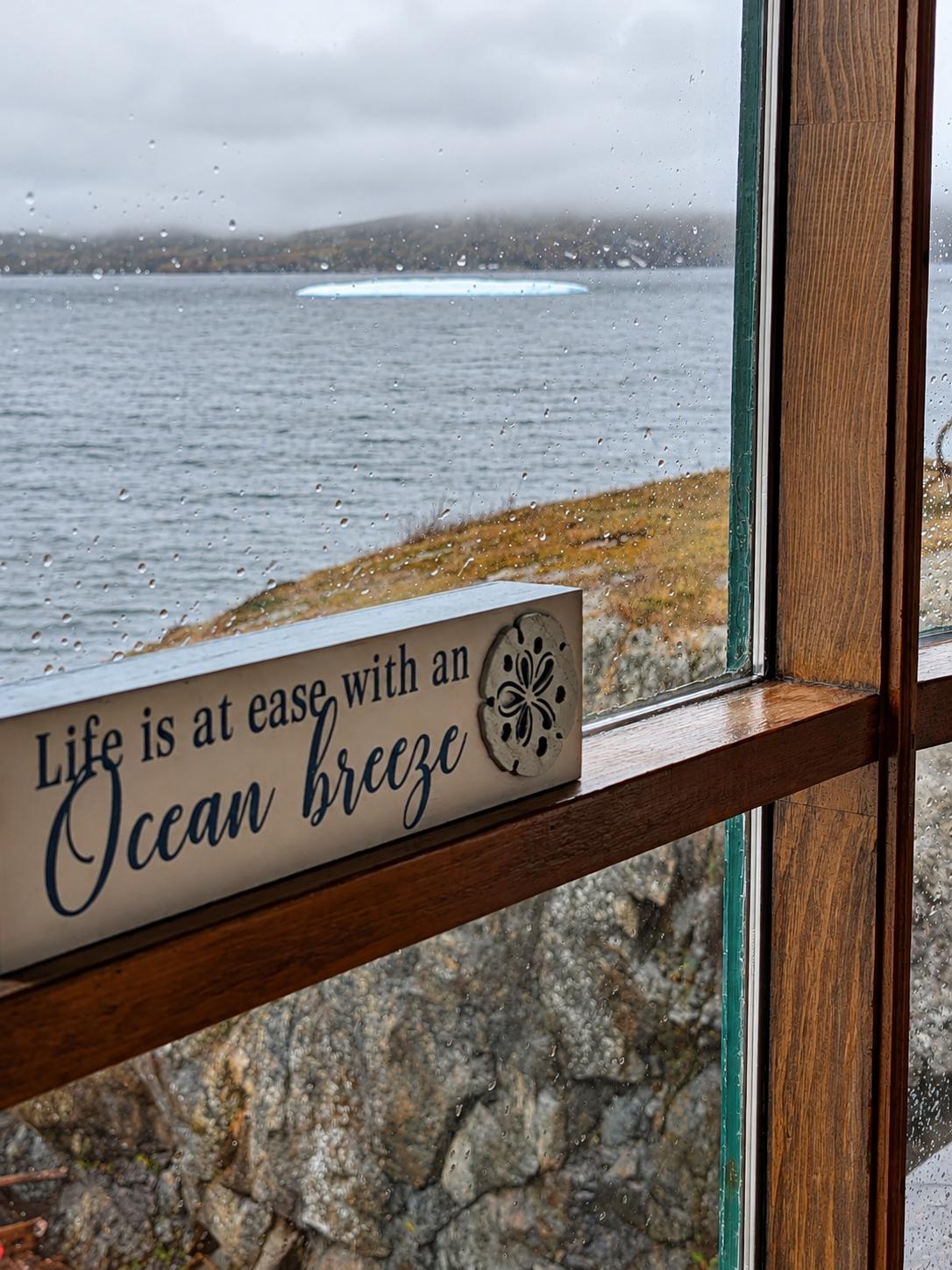
Over the course of our three days in St Anthony we spotted several icebergs just down the road at Fishing Point.
Icebergs Near Fishing Point:
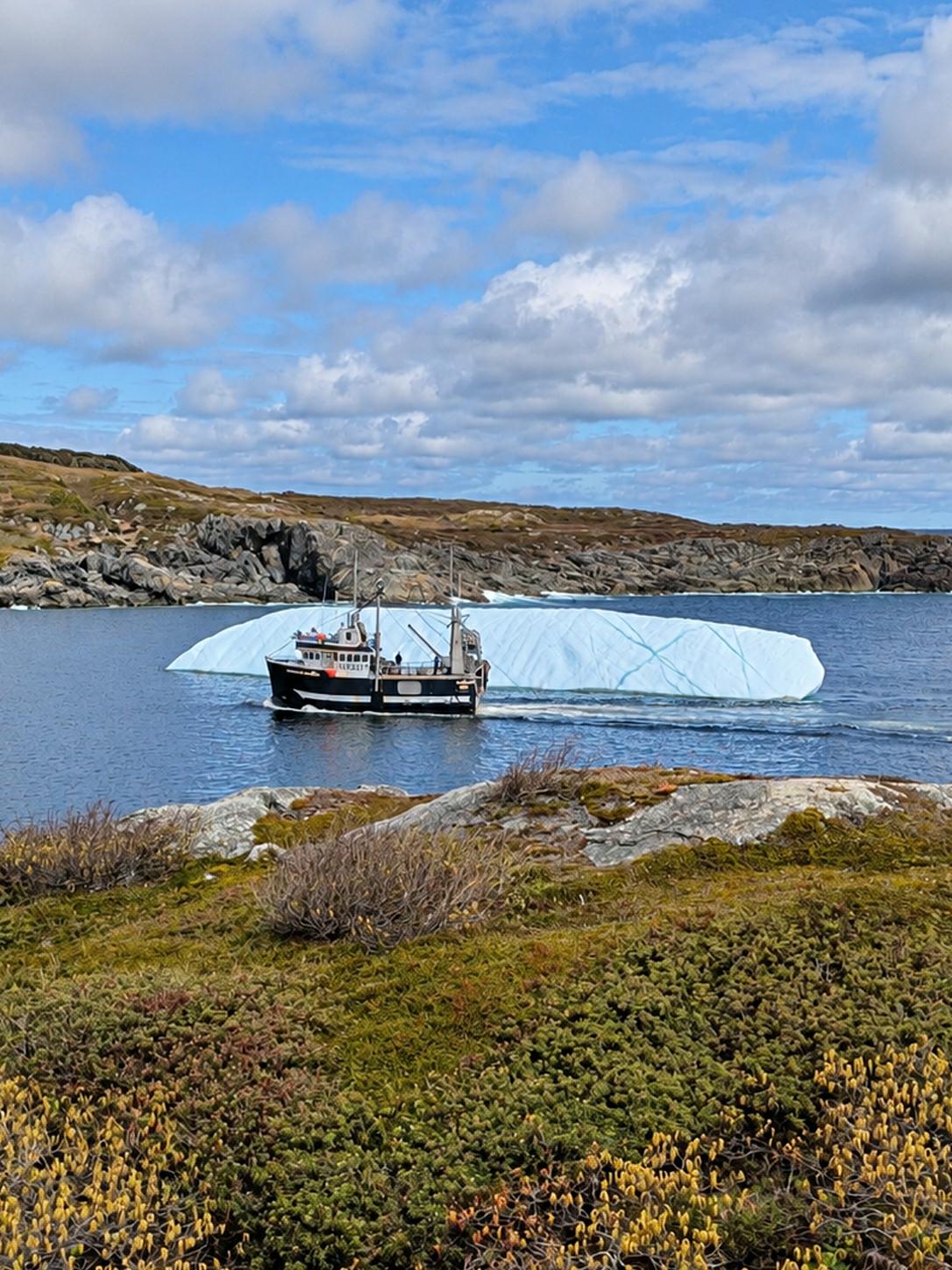
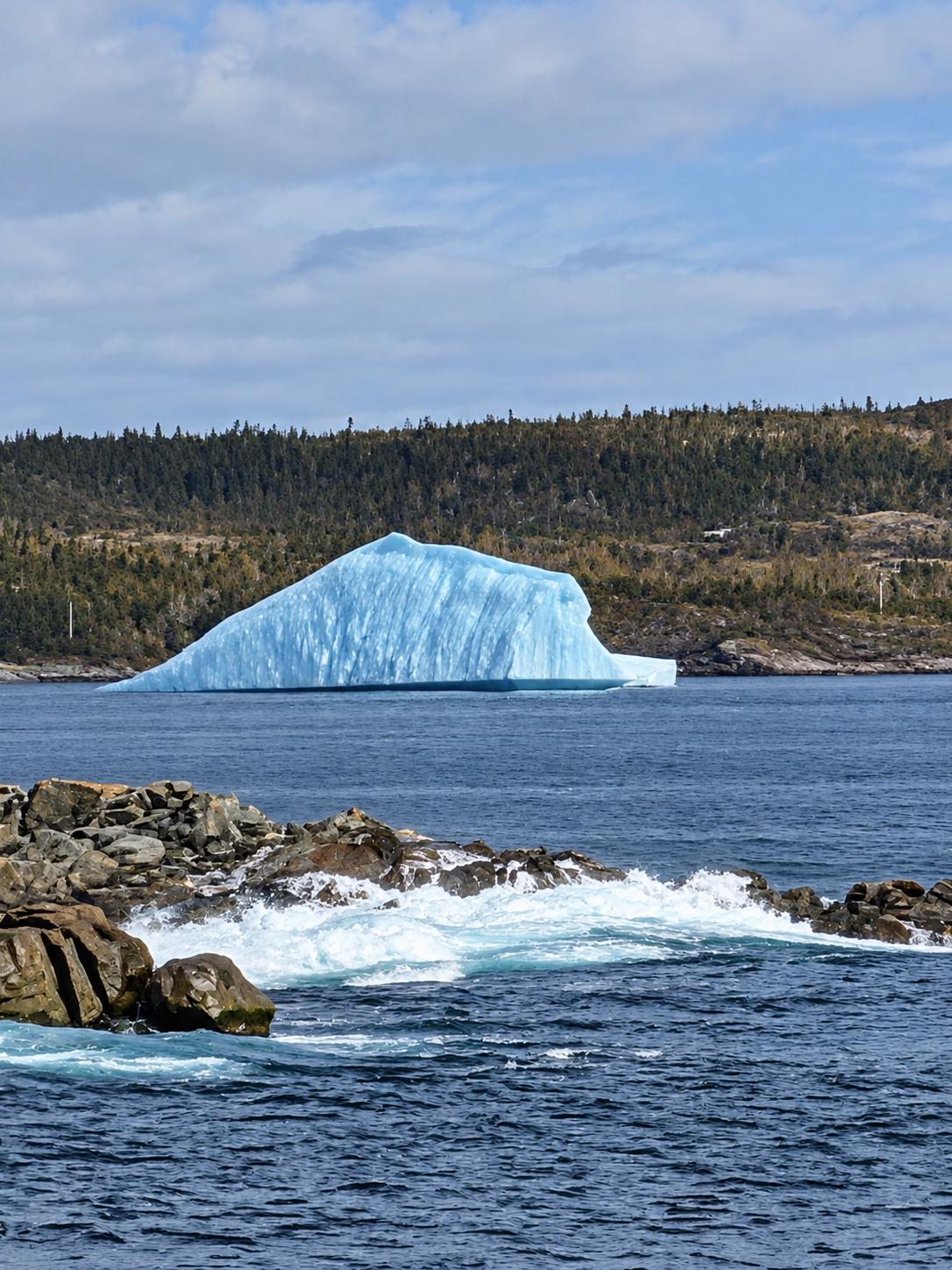
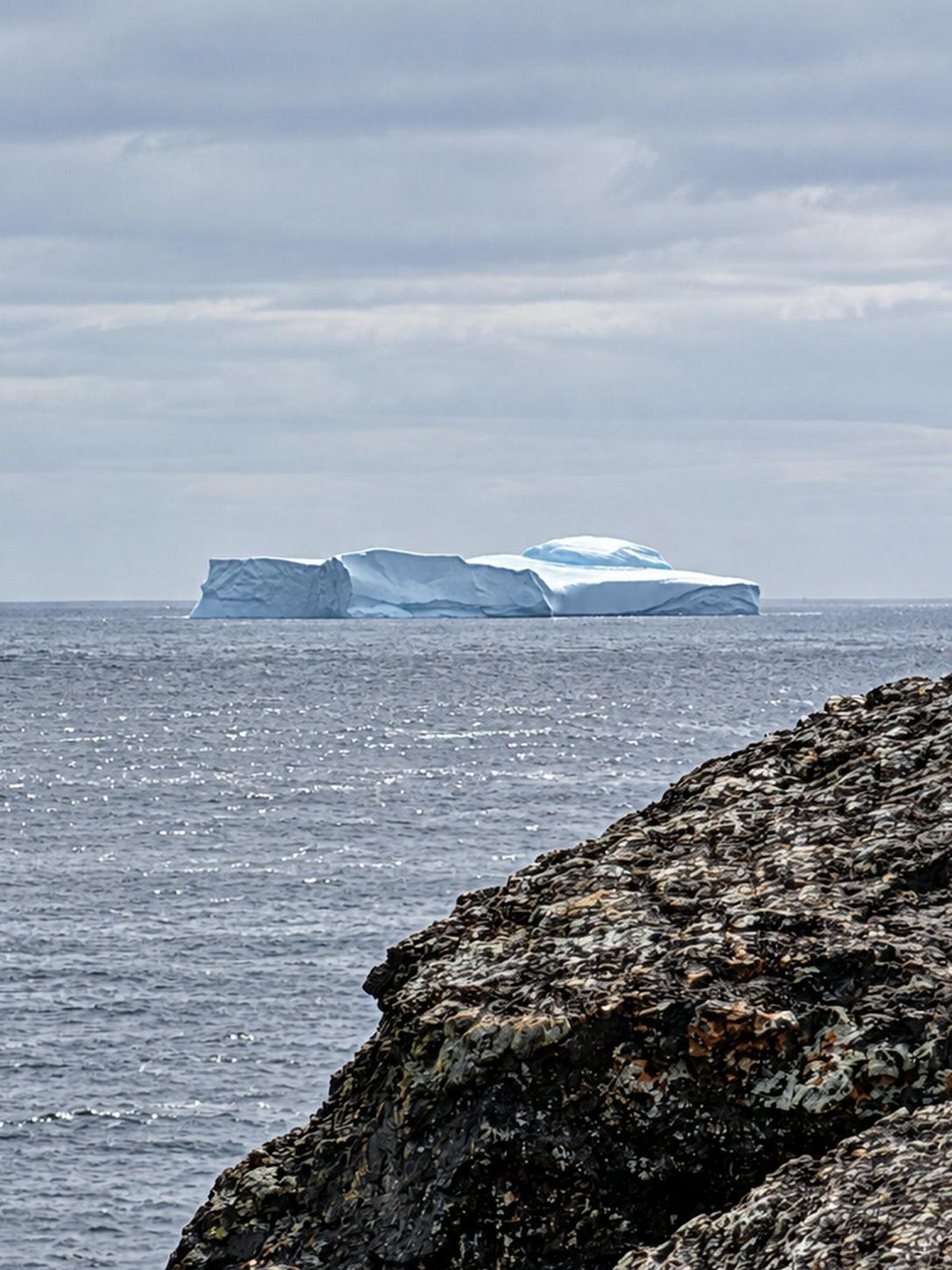
Exploring more of Newfoundland’s Great Northern Peninsula we spotted several icebergs in nearby St. Anthony Bight as well as far off the coast at L’Anse aux Meadows.
We covered our time in St. Anthony in more detail in our separate article, St. Anthony and L’Anse aux Meadows, including other places we explored along Newfoundland’s northern coast.
Another Visit to Twillingate
Unlike our 2024 visit, we didn’t stay overnight in Twillingate this time. Instead, we made a day trip from our base in Gander.
As we crossed the bridge entering town, we spotted an iceberg in the distance near Jones Cove. We later photographed it from the Prime Berth Fishing Museum.
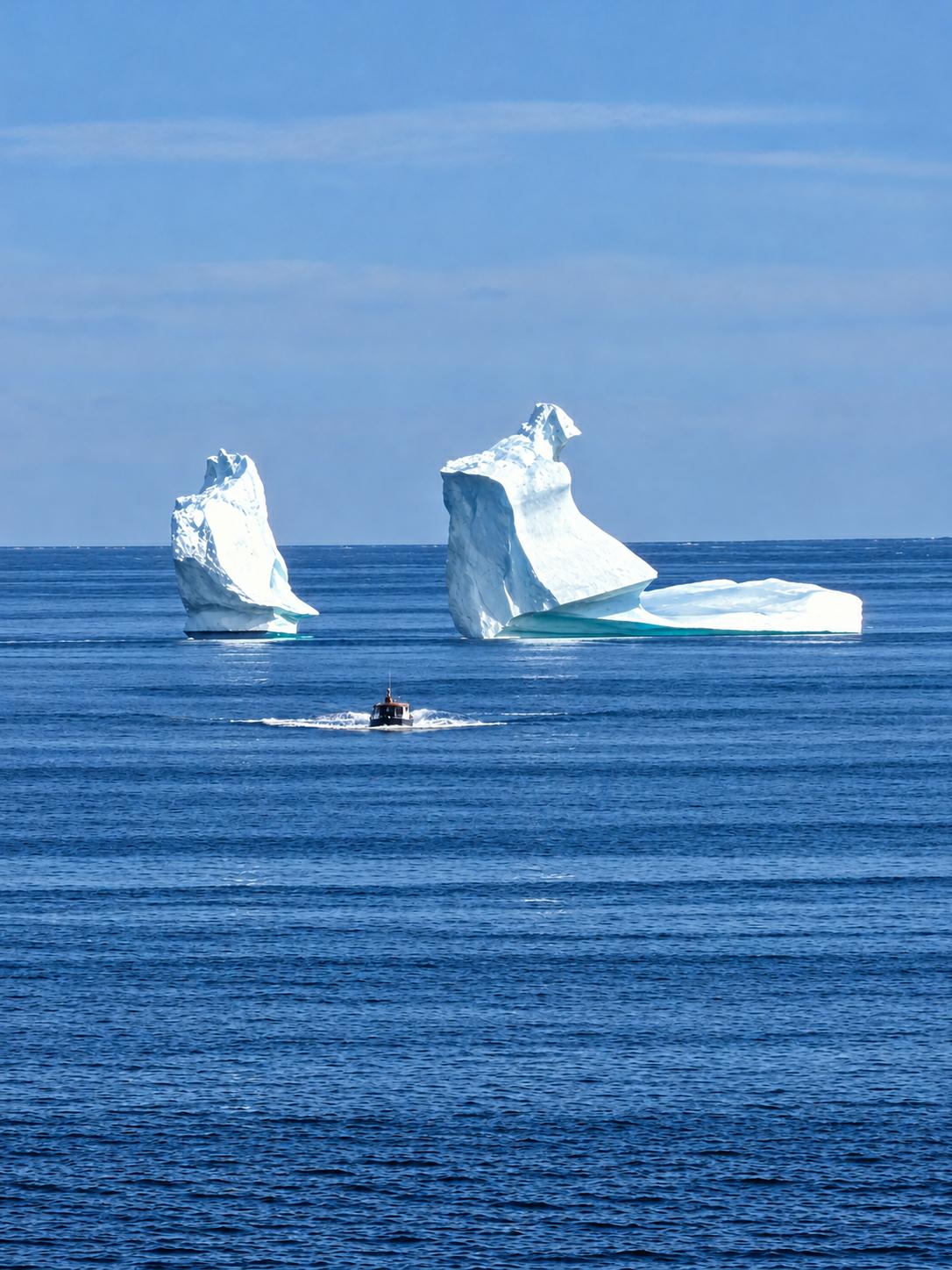
We learned that a closer vantage point might have been possible by hiking the Lower Little Harbour Trail, but we didn’t make that hike.
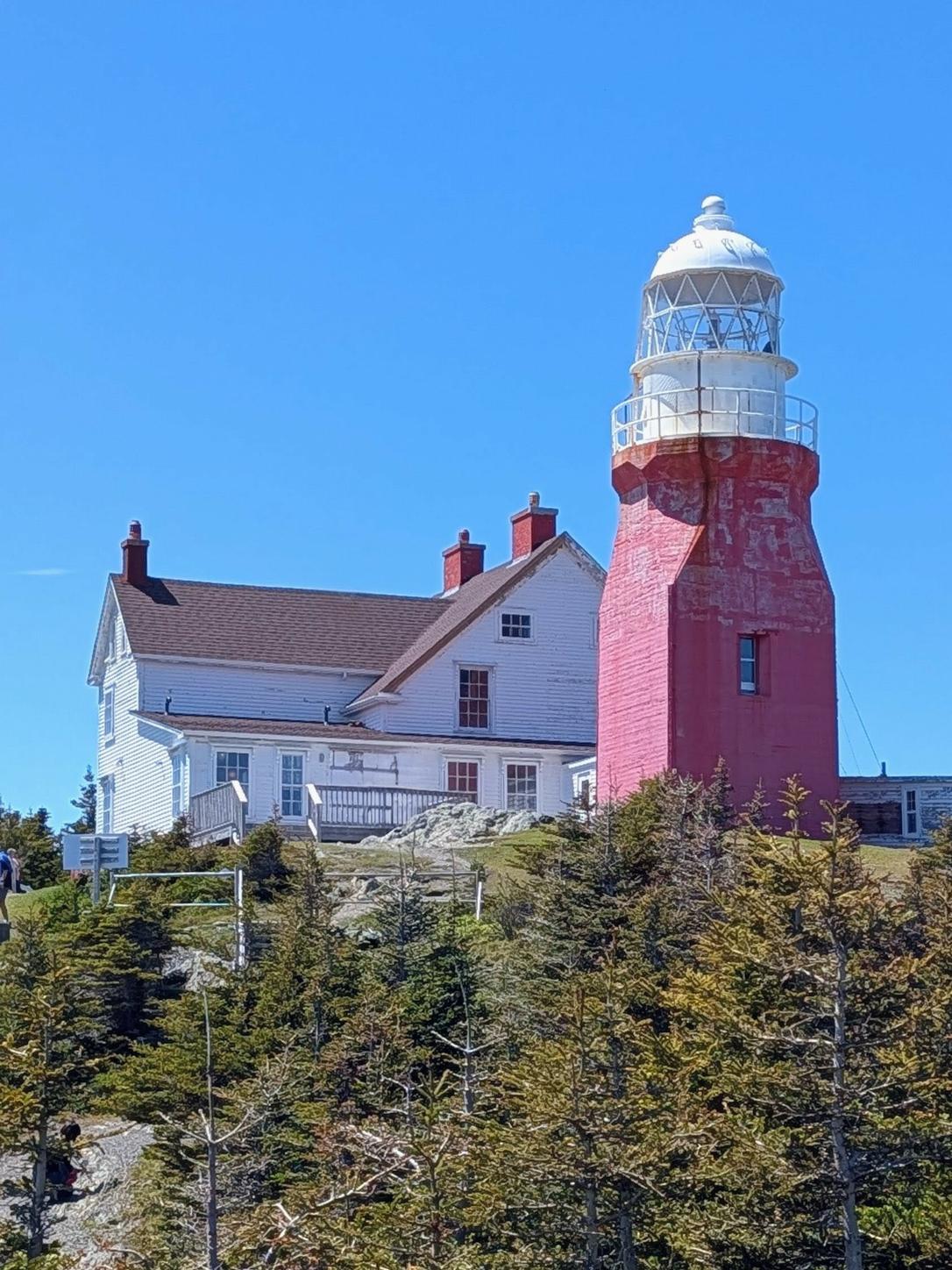
We also spent some time exploring the local shops before returning to Long Point Lighthouse near Crow Head. Having visited in May 2024, we wanted to stop again and enjoy the sweeping views of the rugged coastline.
This time, the bright sunshine and blue skies made for a very different experience from our earlier visit. Afterward, we made our way back to Gander.
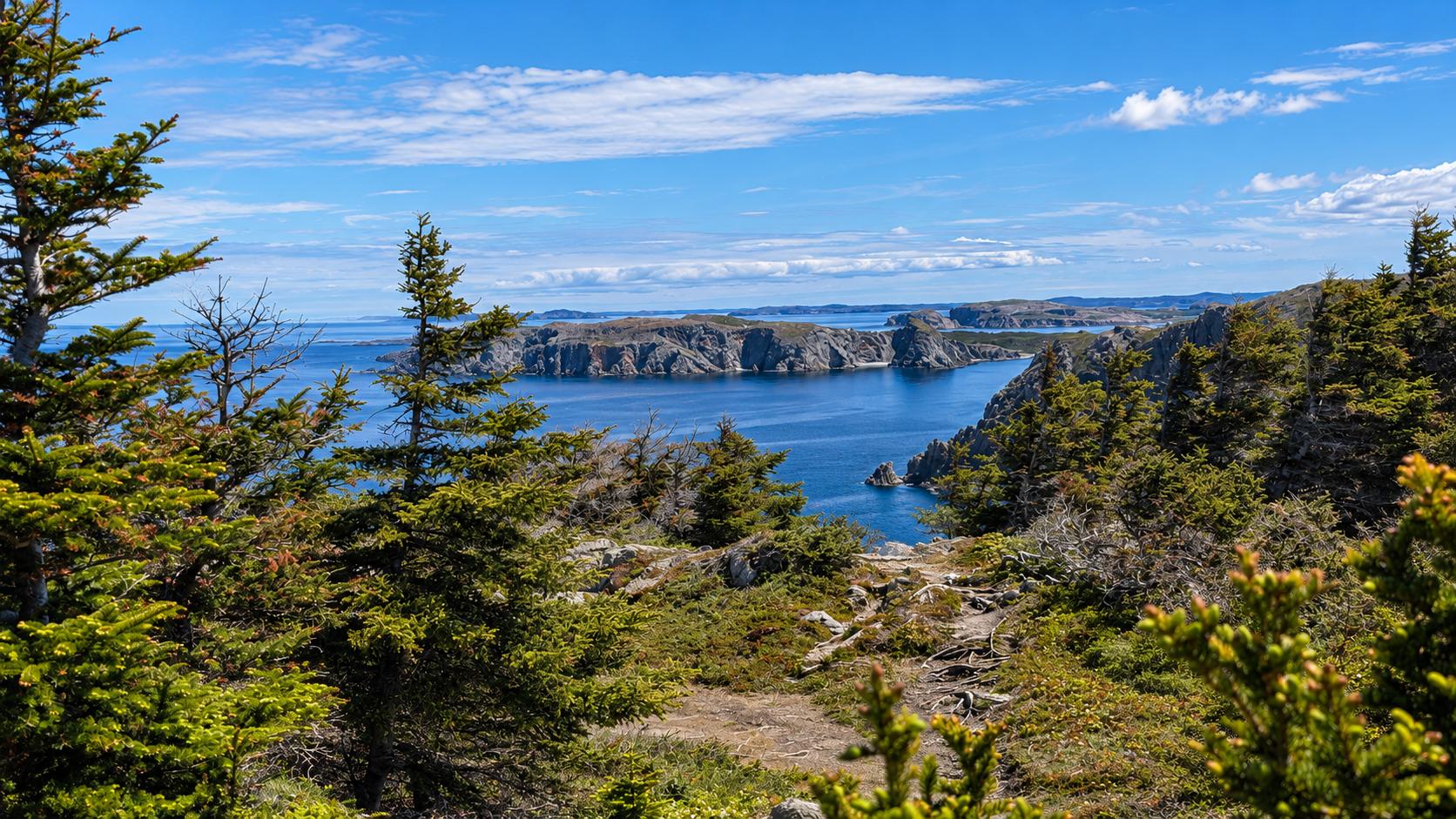
An Iceberg from the Fogo Island Ferry
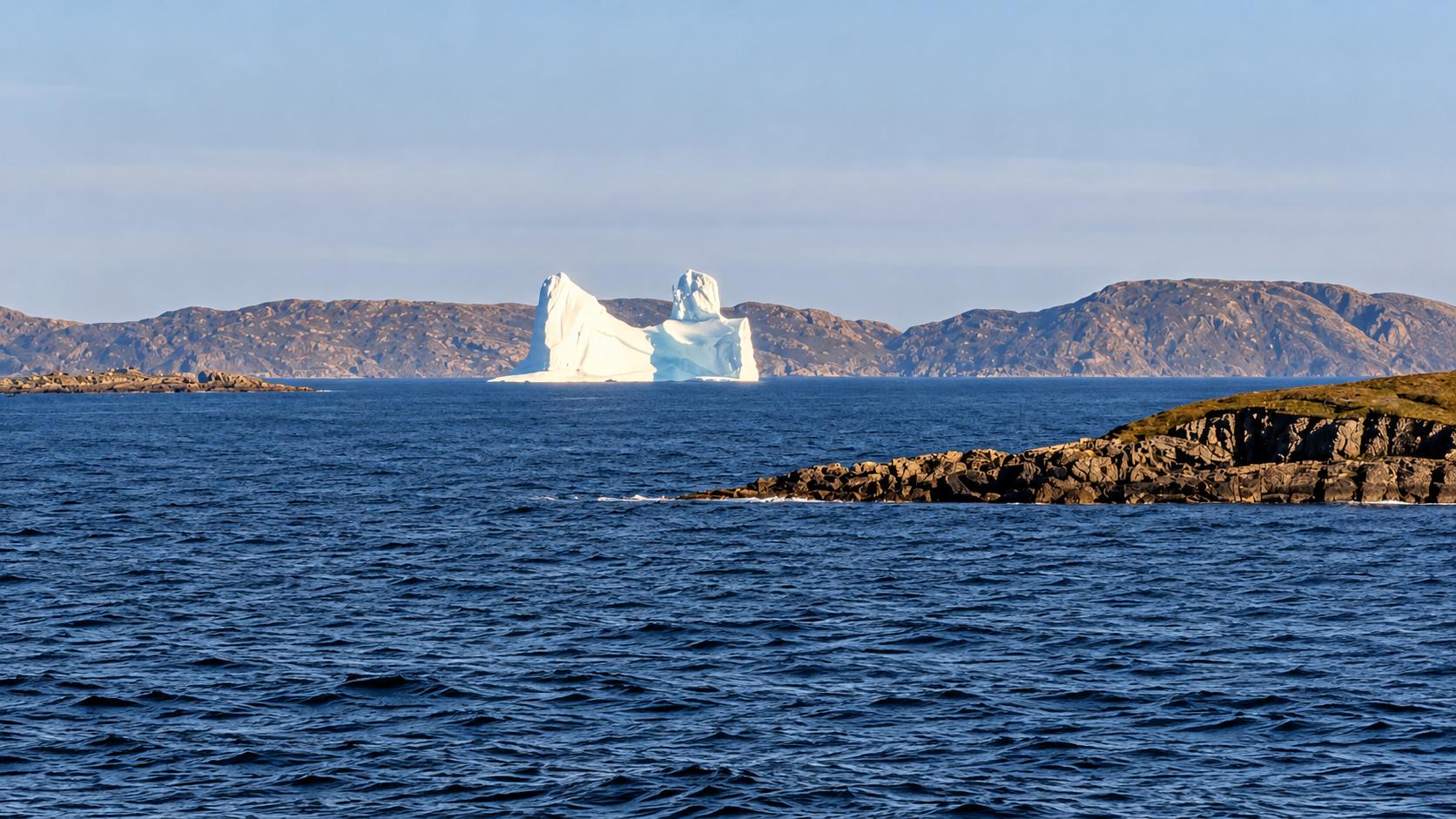
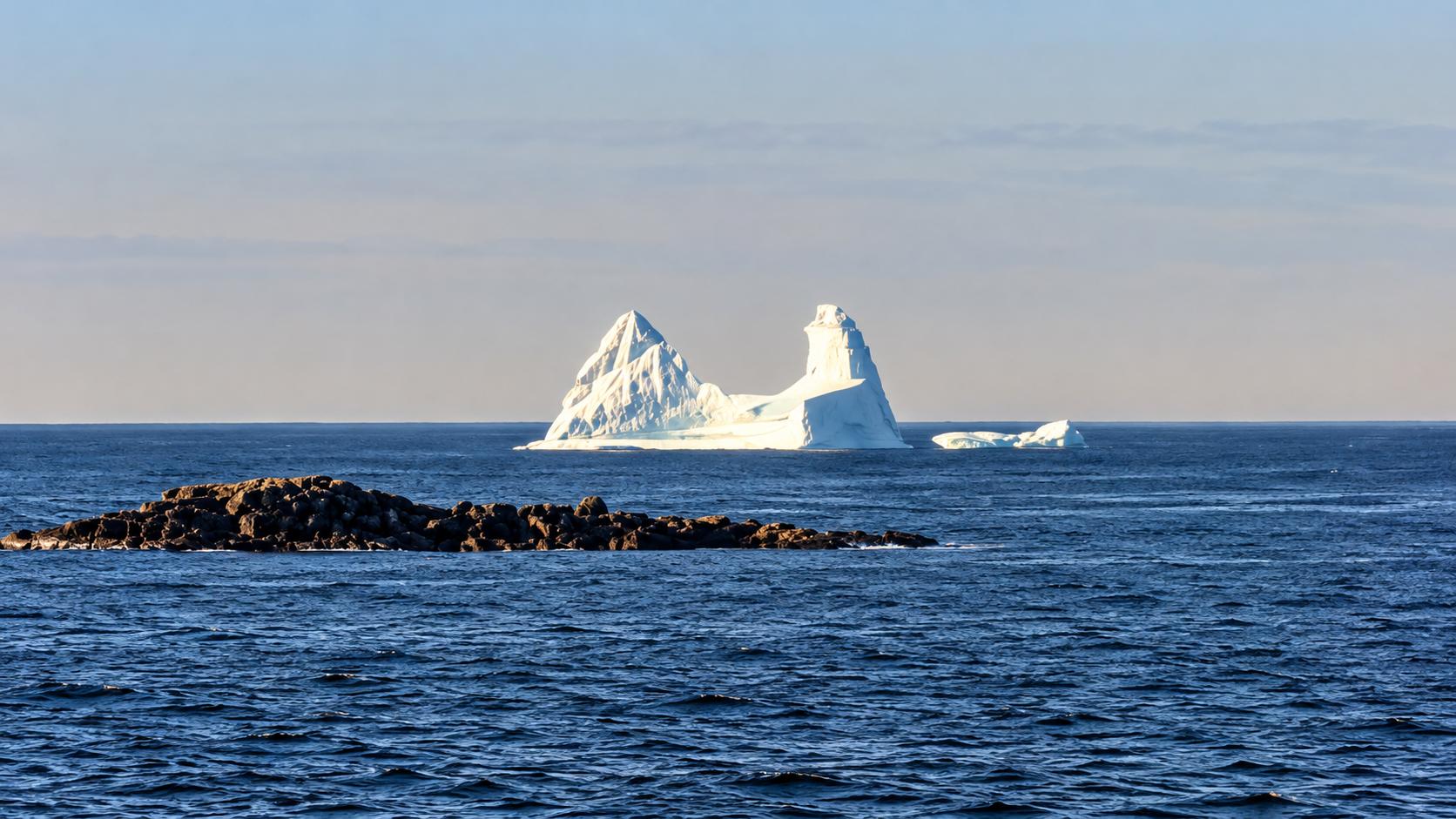
Another memorable iceberg sighting came on June 26, 2026, during our day trip to Fogo Island.
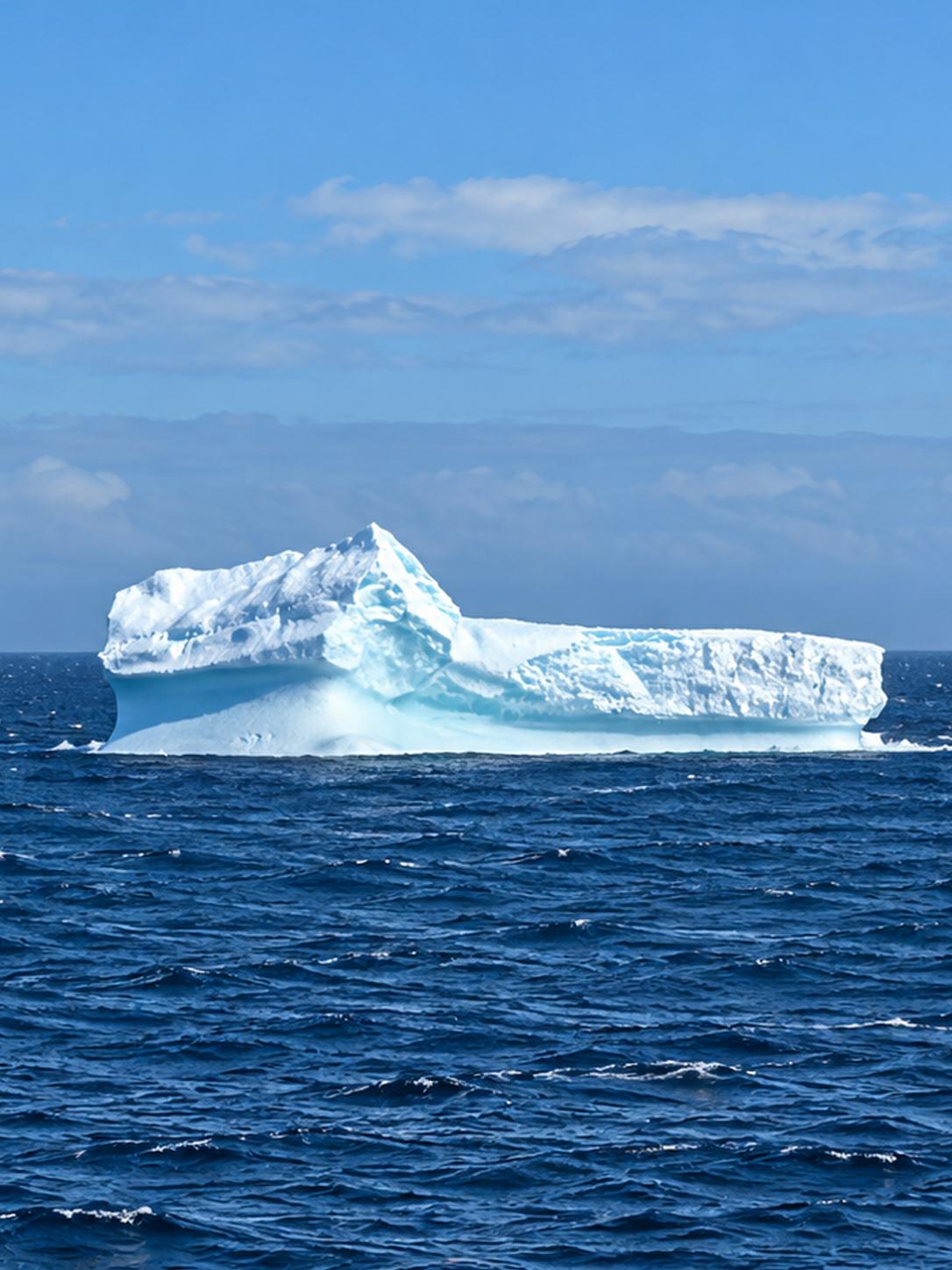
We spotted a large iceberg from the ferry on the way over, and fortunate enough to see the same iceberg again on our return crossing.
What made this sighting especially interesting was how different the iceberg looked several hours later. Whether it had rotated in the water or we were simply seeing it from a different angle, its changing appearance gave us two very different views of the same iceberg.
Icebergs Spotted From Fogo Island Ferry
It was another reminder that sometimes the best iceberg sightings happen when you’re simply traveling from one place to another.
When Is the Best Time to See Icebergs in Newfoundland?
Newfoundland’s iceberg-viewing season generally runs from spring into early summer, although the timing varies depending on the year and where you’re traveling.
Late May and early June can be particularly good times to visit many areas along Iceberg Alley. Farther north, including around St. Anthony, icebergs may remain visible later in the season.
Most of the icebergs seen along Newfoundland’s coast originate from glaciers in Greenland. They drift south through the Labrador Sea, carried by ocean currents, and some eventually reach the waters off Newfoundland.
Popular places to look for icebergs include St. Anthony, Twillingate, Fogo Island, Bonavista, and areas along the eastern coast.
But as we discovered firsthand, visiting during the right month doesn’t guarantee you’ll see one.
Why Some Iceberg Seasons Are Better Than Others
The number of icebergs reaching Newfoundland can vary considerably from year to year.
According to the International Ice Patrol, 385 icebergs crossed south of 48°N during the 2023 season, compared with just 22 in 2024. The 2025 season saw 250 cross that latitude.
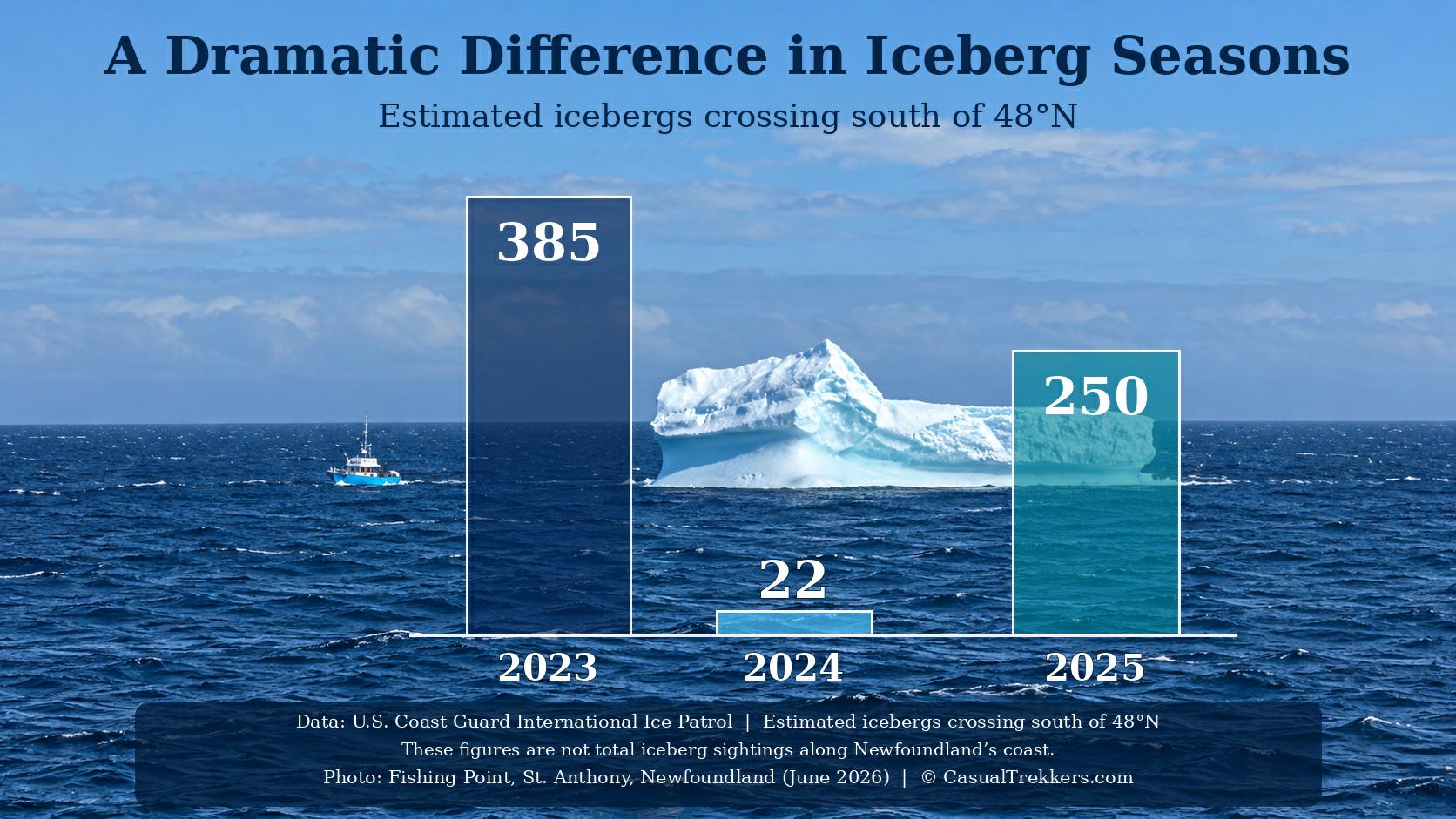
The 48°N latitude line passes through Newfoundland near Gander, so these figures reflect icebergs traveling farther south—not all the icebergs that may be visible along Newfoundland’s coastline, including those farther north around Twillingate and St. Anthony.
Those numbers help explain why our first visit was so different from what we’d hoped for. They also illustrate why reports from previous years aren’t necessarily a reliable guide to what you’ll encounter on your own trip.
Weather, ocean currents, wind, and the movement of the ice all affect where icebergs may be visible at any given time.
How We Tracked Down Icebergs
Before and during both trips, we used a combination of online resources and local reports to help us decide where to look.
One of our most useful resources was the Newfoundland and Labrador Iceberg Reports Facebook group. Travelers and residents regularly shared photographs, locations, and recent sightings, making it easier to determine whether an iceberg might still be visible.
We also checked IcebergFinder and other online iceberg reports.
These resources can be helpful, but sightings aren’t always current. Icebergs move, sometimes considerably, and one reported several days earlier may no longer be in the same location.
Whenever possible, we found that recent firsthand reports were particularly valuable.
For additional planning information, Newfoundland and Labrador Tourism also offers a Complete Guide to Icebergs.
A Few Tips from Our Experiences
- Stay flexible. If seeing icebergs is a priority, leave some room in your itinerary to follow recent sightings.
- Check local reports frequently. Facebook groups and other firsthand accounts can provide useful information about where icebergs have been spotted.
- Bring binoculars or a camera with a good zoom lens. Many icebergs are farther offshore than photographs might suggest.
- Dress warmly for boat tours. Even on a sunny day, the wind and temperatures on the water can feel surprisingly cold.
- Don’t count on a boat tour guaranteeing icebergs. Our 2024 tour was enjoyable, but there simply weren’t any icebergs in the area.
- Keep a safe distance. Icebergs can break apart or roll unexpectedly, creating dangerous conditions nearby.
Final Thoughts
Our two Newfoundland trips provided very different iceberg-watching experiences.
In 2024, we spent several days searching and ultimately spotted only two distant icebergs near Lumsden and Cape Freels. In 2026, we encountered icebergs around St. Anthony, Twillingate, and Fogo Island, sometimes without having to go out of our way to find them.
Of course, iceberg watching is only one reason to visit Newfoundland. Even when the icebergs were scarce, we enjoyed the dramatic coastline, welcoming communities, and memorable experiences along the way.
But there’s something special about seeing one of those enormous, beautifully sculpted pieces of ice floating offshore. And after our first trip, finally experiencing that in 2026 made the return visit especially rewarding.
Thinking of visiting Newfoundland?
Save this Pin for your trip planning!